If you live on a rural property, camp at gravel-road sites, or simply have a crushed-stone driveway, you already know the problem. The mobility scooter that glides across your living room floor can turn into a slow, shaky, frustrating machine the second the pavement ends. Choosing the right mobility scooter for gravel is less about raw power and more about tires, ground clearance, suspension, and stability.
This guide walks you through exactly what matters, which features of a mobility scooter for gravel are worth paying for, and which models handle loose stone best. We have also included a comparison table so you can see the differences at a glance.
Why Gravel Is Hard on a Standard Scooter
Gravel looks harmless. In reality, loose stone is one of the trickiest surfaces for any small-wheeled vehicle. Each stone shifts under the tire, the surface changes with every few feet, and the wheels constantly lose and regain traction.
A basic indoor-style scooter has small solid tires, low ground clearance, and almost no suspension. On gravel, that combination causes three problems:
- Wheel spin and stalling. Small tires sink into loose stone and lose grip, especially on slopes.
- Harsh vibration. Without suspension, every stone is transmitted straight to your back, hips, and hands.
- Tipping risk. Narrow, light frames get unsettled by uneven ground, which is dangerous on a sloped driveway.
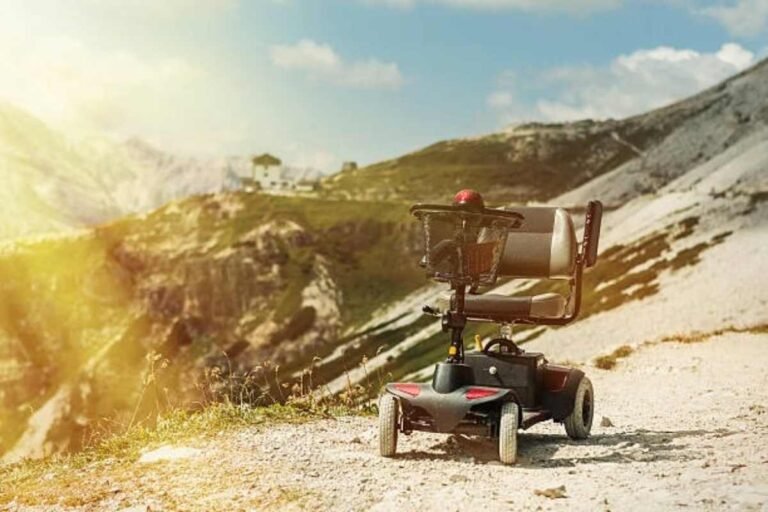
That is why a purpose-built mobility scooter for gravel looks different from a travel scooter. It is heavier, wider, taller off the ground, and built around bigger tires.
What Makes a Good Mobility Scooter for Gravel?
Before you look at specific models, understand the features that separate a capable mobility scooter for gravel from one that will frustrate you within a week.
1. Pneumatic (Air-Filled) Tires
This is the single biggest factor. Pneumatic tires act like a cushion. They flex over stones, spread your weight across more surface area, and grip far better than solid or foam-filled tires. A pneumatic tires mobility scooter will always outperform a flat-free model on loose stone. The trade-off is that air-filled tires can puncture, so keep a repair kit or sealant handy.
2. Generous Ground Clearance
Look for at least three to four inches of clearance. Raised stone, ruts, and washouts are common on gravel paths, and a low frame will scrape or get hung up. Higher clearance protects the battery box and the underside of the scooter.
3. Four Wheels Over Three
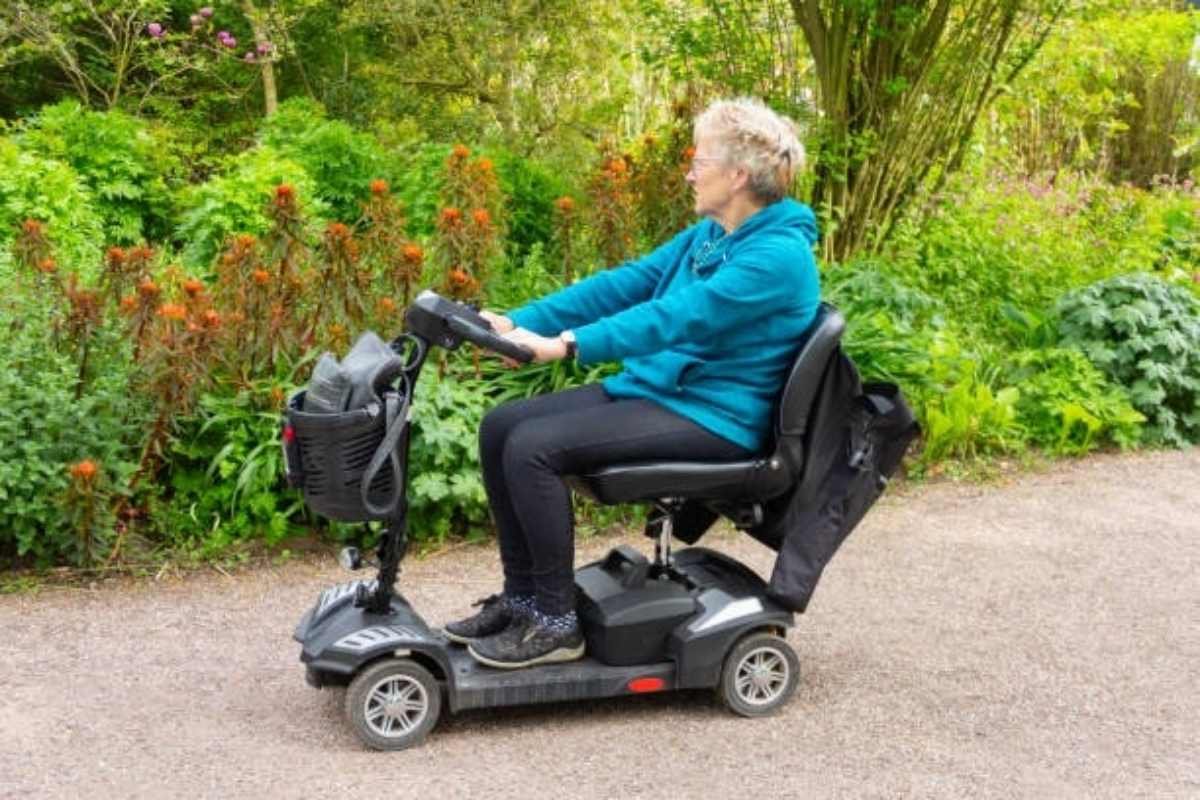
Three-wheel scooters turn tightly, which is great indoors. On gravel, however, the four-wheel layout wins for stability. A four-wheel mobility scooter for rough ground resists tipping and tracks straighter over loose surfaces. If your path includes a slope, treat four wheels as the safer default.
4. Real Suspension
Front and rear suspension absorb the constant chatter of stone. If you ride for more than a few minutes at a time, suspension is the difference between a comfortable outing and a sore back.
5. Weight Capacity and Frame Strength
A heavy-duty outdoor mobility scooter is built with a stronger frame, a more powerful motor, and a higher weight limit. Even if you are well under the limit, that extra build quality helps on uneven ground. Always check the manufacturer’s stated capacity for your specific model.
6. Motor Power and Battery Range
Climbing gravel takes more energy than rolling on pavement. Choose a model with a strong motor and a battery that comfortably exceeds your usual trip. Range listed by the manufacturer is measured on smooth, flat ground, so expect noticeably less on loose stone.
Best Mobility Scooter for Gravel: Our Top Picks
Here are the models that make the most sense for gravel, based on tire design, clearance, stability, and overall build.
Pride Baja Wrangler 2
The Baja Wrangler 2 is built specifically for rugged outdoor use. It features large pneumatic tires, strong suspension, and a robust frame that is designed to handle dirt, grass, and gravel. For most people searching for a mobility scooter for gravel, this is the first model worth looking at. It is large and heavy, so it is best for people who will use it mainly at home or with a vehicle that can carry it.
Pride Baja Raptor 2
The Baja Raptor 2 offers a similar off-road focus with a sporty look and excellent stability on uneven surfaces. It is a strong option if you want a capable mobility scooter for gravel that still feels agile when turning. Like the Wrangler, it is a heavy machine and not meant for frequent lifting.
Pride Victory 10.2
The Victory 10.2 is a well-rounded four-wheel scooter that balances comfort and outdoor ability. It handles a firm gravel driveway or a packed-stone path well, though it is not as aggressive as the Baja models on loose, deep stone. It is a smart middle-ground mobility scooter for gravel if your stone is well compacted.
EV Rider TransPorter
The TransPorter is a portable four-wheel scooter that disassembles for transport. It can manage short stretches of packed gravel, but it is better thought of as a travel scooter with occasional light-duty use on stone. If portability matters more than heavy off-road ability, it is a compromise mobility scooter for gravel worth a look.
Golden Buzzaround EX
The Buzzaround EX is a lightweight, easy-to-travel scooter. It is not a true gravel machine, but it can cross short sections of fine, compacted gravel such as a small parking area. Treat it as a good choice for light use rather than a dedicated mobility scooter for gravel.
Comparison Table: Mobility Scooter for Gravel Models
| Model | Wheels | Best Terrain | Gravel Rating | Portability | Best For |
|---|---|---|---|---|---|
| Pride Baja Wrangler 2 | 4 | Loose gravel, dirt, grass | Excellent | Low (heavy) | Rural properties and rough paths |
| Pride Baja Raptor 2 | 4 | Loose gravel, dirt, uneven ground | Excellent | Low (heavy) | Active riders wanting off-road feel |
| Pride Victory 10.2 | 4 | Packed gravel, pavement | Good | Medium | Gravel driveways and mixed use |
| EV Rider TransPorter | 4 | Packed gravel, pavement | Fair | High (disassembles) | Travel with occasional gravel |
| Golden Buzzaround EX | 3 or 4 | Fine, compacted gravel | Limited | High (lightweight) | Short, light gravel crossings |
Specifications vary by configuration and year, so always confirm details on the manufacturer’s website before buying.
Pros and Cons of Using a Mobility Scooter for Gravel
Pros
- A mobility scooter for gravel restores independence on rural land, long driveways, and rustic campsites
- Pneumatic tires and suspension make the ride far more comfortable
- Heavy-duty frames offer better stability on uneven ground
- Many gravel-capable models also handle grass and dirt well
Cons
- A mobility scooter for gravel is heavier and harder to transport than a travel model
- Larger models cost more than standard travel scooters
- Air-filled tires can puncture and need occasional maintenance
- Battery range drops on loose stone compared with pavement
Safety Tips for Riding on Gravel
Owning the right mobility scooter for gravel is only half the picture. How you ride matters just as much.
- Slow down on loose stone. Reduce your speed setting before you reach the gravel, not after.
- Take slopes straight. Avoid turning sharply while going up or down an incline.
- Choose the firmest line. Packed tire tracks are usually safer than loose, deep edges.
- Check your tire pressure. Soft tires reduce grip and stability, so check them regularly.
- Keep your weight centered. Sit upright and avoid leaning on turns.
- Charge fully before long trips. Gravel drains the battery faster than pavement.
How to Maintain a Gravel-Ready Scooter
A mobility scooter for gravel faces dust, grit, and constant vibration. A little routine care keeps your scooter reliable. Wipe down the frame and clean around the wheels after riding, check tire pressure weekly, and inspect the tires for embedded stones or small punctures. Keep battery terminals clean and store the scooter in a dry spot. A well-kept mobility scooter for gravel can last many years even in tough conditions.
Can You Improve a Scooter for Gravel Use?
Some owners add small upgrades to help a standard scooter cope. Tire sealant can reduce puncture risk, a slightly raised seat position improves visibility, and a covered storage spot protects the motor from dust. That said, accessories cannot turn a lightweight indoor scooter into a rugged one. If gravel is part of your daily routine, start with a model that was designed for it. Buying the correct mobility scooter for gravel up front is cheaper than fixing the wrong one.
Buying Checklist: Before You Choose a Mobility Scooter for Gravel
Ask yourself these questions before you buy:
- How deep and loose is the gravel on your property?
- Is the path flat, or does it include slopes?
- Will you need to lift or transport the scooter regularly?
- How far do you ride in a typical outing?
- Does the model offer pneumatic tires and real suspension?
If your gravel is deep and your terrain is rough, choose a Baja-style model. If your gravel is packed and you also want portability, a mid-range option may be enough. Matching the machine to the surface is the key to getting the right mobility scooter for gravel.
Frequently Asked Questions
Can any mobility scooter drive on gravel?
Technically many can cross a short stretch, but most standard scooters struggle. Small solid tires, low clearance, and no suspension make loose stone difficult. A dedicated mobility scooter for gravel with pneumatic tires is far safer and more comfortable.
Are three-wheel or four-wheel scooters better on gravel?
Four-wheel models make the better mobility scooter for gravel because they are more stable and resist tipping on uneven ground. Three-wheel models turn tighter but are less forgiving on loose surfaces.
Do I need pneumatic tires for gravel?
Pneumatic tires are strongly recommended. They absorb bumps and grip loose stone far better than solid tires, which makes a big difference in both comfort and control.
How much ground clearance should a gravel scooter have?
Aim for at least three to four inches. More clearance helps you avoid scraping ruts, raised stones, and washed-out areas.
Will gravel damage my scooter?
Gravel will not damage a well-built model, but grit and vibration cause faster wear on cheaper machines. Regular cleaning and tire checks keep a mobility scooter for gravel in good shape.
Is a mobility scooter for gravel good for hills?
Many are, provided the gravel is firm and the model has a strong motor. Always take slopes slowly and straight, and never exceed the manufacturer’s stated incline rating.
Final Thoughts
Gravel does not have to limit your independence. With the right tires, clearance, suspension, and frame, a mobility scooter for gravel lets you enjoy your driveway, garden, and country paths with confidence. For the roughest terrain, the Pride Baja Wrangler 2 and Baja Raptor 2 are the strongest choices. For packed stone with some versatility, the Pride Victory 10.2 is a smart pick. Match the scooter to your surface, ride sensibly, and you will have a dependable mobility scooter for gravel for years to come.