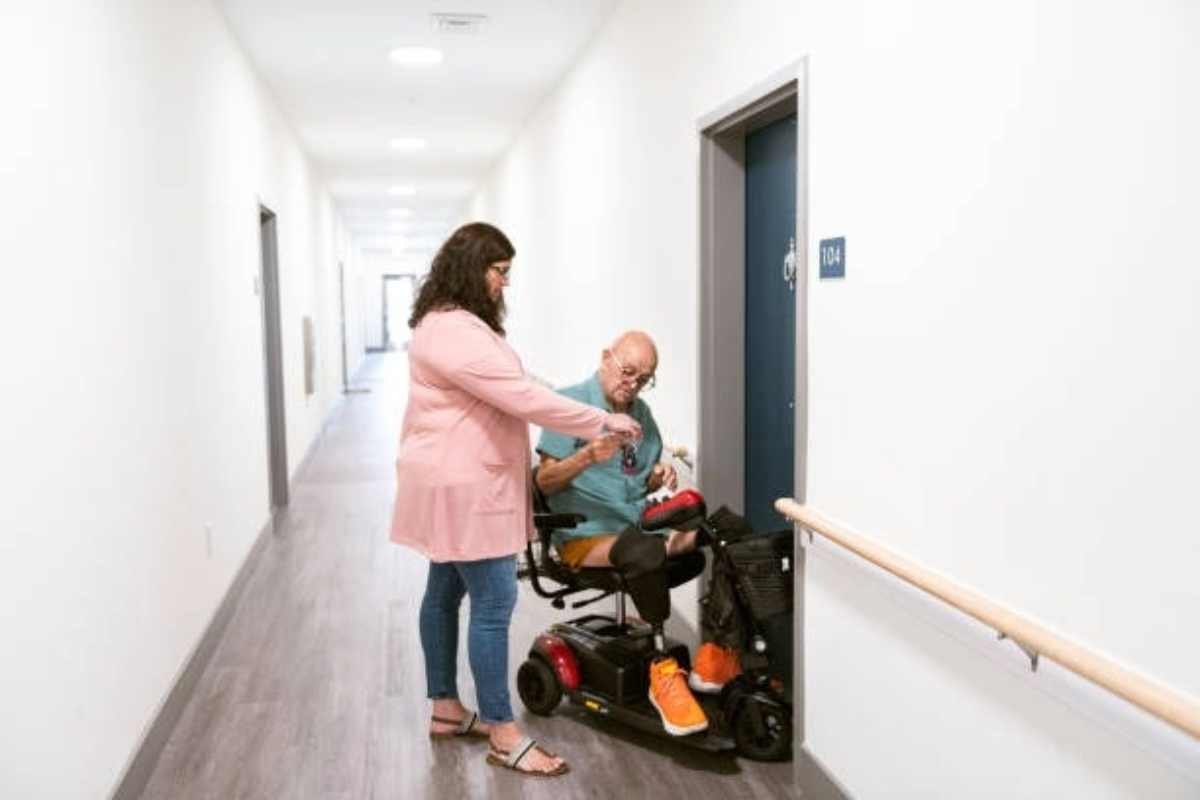
Finding the right mobility scooter for apartments is harder than shopping for one on a big open driveway. Narrow hallways, tight elevators, small closets, and strict building rules all change what “the best scooter” actually means once you live in a multi-unit building. A machine that looks great in a showroom can be completely unusable if it can’t turn inside your kitchen or fit through your unit’s doorway.
In this guide, we break down exactly what to look for in a mobility scooter for apartments, compare six real models from trusted brands, and answer the questions apartment dwellers ask most before buying.
Why Apartment Living Changes What You Need in a Scooter
A mobility scooter for apartments isn’t just a smaller version of a standard scooter — it needs a specific mix of features that outdoor-only models often skip entirely.
When you live in a building with shared hallways, a single elevator, and a compact unit layout, a scooter has to check several boxes at once:
- Narrow overall width so it clears standard interior doorways (usually 28–32 inches)
- Tight turning radius to manage galley kitchens, bathrooms, and short hallways
- Foldability or disassembly for storing in a closet instead of a garage
- Manageable weight if you’ll need to lift pieces into a car trunk or up a step
- Quiet operation so late-night trips to the kitchen don’t wake up neighbors through shared walls
Any compact mobility scooter for indoor use should hit most of these marks, and the best mobility scooter for apartments will check off nearly every one at once. A full-size touring scooter, by contrast, is built for distance and outdoor stability, not for squeezing past a couch.
What to Look for Before You Buy a Mobility Scooter for Apartments
Before comparing specific models, it helps to understand the four specs that matter most indoors.
1. Width and Turning Radius
This is the single biggest factor for a mobility scooter for apartments. A scooter with a 32-inch width and a 34-inch turning radius will struggle in a studio apartment, while a model under 24 inches wide with a sub-32-inch turning radius can usually navigate most standard interior spaces without drama.
2. Portability for Storage
Apartments rarely come with a garage or shed. A folding mobility scooter or one that splits into 2–4 lightweight pieces lets you tuck it into a closet, under a bed frame, or behind a couch when it’s not in use.
3. Weight Capacity and Battery Range
Even indoors, weight capacity matters — check it against your own needs plus anything you’ll carry (bags, a small pet carrier, laundry). Battery range matters less for short indoor trips but becomes important the moment you head out to the mailbox, laundry room, or parking lot.
4. Building and HOA Rules
Many apartment complexes and HOAs have specific rules about what can travel through shared hallways and elevators, including maximum width and sometimes maximum speed. Always check your lease or property management office before assuming any mobility scooter for apartments is automatically approved.
The 6 Best Mobility Scooters for Apartments (Compared)
Below are six scooters from established manufacturers that are genuinely suited to compact indoor living, not just re-labeled outdoor models.
| Model | Width | Turning Radius | Folds/Disassembles | Weight Capacity | Best For |
|---|---|---|---|---|---|
| Pride Mobility Go-Go Elite Traveller Plus | 22.5 in | 31.5 in | Disassembles into 5 pieces | 300 lbs | Best overall mobility scooter for apartments |
| Golden Technologies Buzzaround EX | 22 in | 34 in | Disassembles into 4 pieces | 260 lbs | Longer indoor-to-outdoor trips |
| Drive Medical Scout Compact | 21.5 in | 31 in | Disassembles into 5 pieces | 250 lbs | Smallest studio apartments |
| EV Rider Transport AF+ | 23 in | 33 in | Folds automatically at the touch of a button | 275 lbs | One-handed folding for storage |
| Shoprider Echo | 22 in | 33.5 in | Disassembles into 4 pieces | 300 lbs | Budget-friendly indoor use |
| AFIKIM Afiscooter S3 | 24.5 in | 37 in | Does not fold; wider frame | 400 lbs | Wider apartments needing extra stability |
1. Pride Mobility Go-Go Elite Traveller Plus
The Go-Go Elite Traveller Plus is consistently one of the top-rated choices for anyone searching for a mobility scooter for apartments because it balances a narrow 22.5-inch width with a genuinely tight turning radius. It disassembles into five manageable pieces, none over about 25 pounds, so it’s realistic to break down and store in a coat closet.
2. Golden Technologies Buzzaround EX
The Buzzaround EX trades a slightly wider turning radius for extra battery range, making it a strong mobility scooter for apartments if you regularly travel between your unit, the mailroom, and nearby errands. It still disassembles for compact storage.
3. Drive Medical Scout Compact
If your unit is genuinely tiny — think a studio or a one-bedroom with narrow hallways — the Scout Compact’s 21.5-inch width makes it one of the narrowest mobility scooter for apartments options on the market, and it still holds up to 250 lbs.
4. EV Rider Transport AF+
The Transport AF+ automatically folds at the push of a button, which is a major advantage if lifting individual pieces is difficult. For anyone prioritizing ease of storage over raw compactness, this is a practical mobility scooter for apartments with limited closet space.
5. Shoprider Echo
The Echo is a dependable, lower-cost option that still meets the core requirements of a mobility scooter for apartments: narrow width, disassembly for storage, and a turning radius under 34 inches, without the premium price tag of some competitors.
6. AFIKIM Afiscooter S3
Not every apartment is cramped. If you have wider hallways and doorways, the Afiscooter S3 trades some maneuverability for a higher weight capacity and a more stable ride, making it worth considering even though it doesn’t fold down like the others on this list.
Pros and Cons of Using a Mobility Scooter for Apartments
Pros:
- Restores independence for daily indoor and short outdoor trips
- Compact models fit through standard doorways and hallways
- Folding/disassembling designs solve the storage problem apartments create
- Battery-powered options are quiet enough for shared-wall living
- Most models in this category are lighter and easier to transport than full-size scooters
Cons:
- Smaller batteries mean shorter range than outdoor touring scooters
- Lower ground clearance can struggle with thick carpet or uneven thresholds
- Narrower wheelbases can feel less stable at higher speeds outdoors
- Some buildings restrict scooter use in shared hallways or elevators
- Cheaper models may sacrifice durability for compactness
Tips for Using a Mobility Scooter for Apartments Safely Every Day
Owning the right mobility scooter for apartments is only half the equation — using it well inside a shared building matters just as much. A few habits make daily life smoother for you and your neighbors.
Measure before you move. Before your mobility scooter for apartments arrives, measure every doorway, hallway turn, and the interior of your elevator. A scooter that’s a perfect fit on paper can still get stuck at an unexpected corner if the hallway narrows near a fire door or mailroom entrance.
Charge on a predictable schedule. Keep your mobility scooter for apartments charging near an outlet you use daily, ideally somewhere it isn’t blocking a walkway. This keeps the battery topped up and avoids the cable becoming a tripping hazard for roommates or family.
Go slow near shared spaces. Hallways, lobbies, and laundry rooms often have foot traffic you can’t fully predict. Even a compact mobility scooter for apartments should be driven at reduced speed in these areas to avoid collisions with people, carts, or pets.
Protect your flooring. Hard flooring transitions and thresholds can scuff under repeated wheel contact. Threshold ramps, sold separately by most of the brands above, help your mobility scooter for apartments glide over these bumps without damaging floors or straining the motor.
Keep maintenance simple. Wipe down tires after outdoor trips before bringing your mobility scooter for apartments back inside, and check tire pressure and battery contacts monthly. Indoor use is gentler on a scooter than daily outdoor terrain, but regular checks still extend its lifespan.
Frequently Asked Questions
What is the best width for a mobility scooter for apartments?
Aim for a scooter under 24 inches wide. This comfortably clears most standard 28–32-inch interior doorways with a few inches of margin on each side.
Can I store a mobility scooter for apartments in a closet?
Yes, as long as the model disassembles or folds. Most of the scooters above break down into pieces light enough to store in a standard coat closet or under a bed.
Do apartment buildings allow mobility scooters in hallways and elevators?
Most buildings do, but rules vary. Always confirm with your property manager, since some HOAs cap maximum width or restrict scooters to specific elevators.
How much does a good mobility scooter for apartments cost?
Prices for the models above typically range from around $900 for budget options like the Shoprider Echo to $1,800+ for the AFIKIM Afiscooter S3, depending on battery upgrades and accessories.
Is a folding or disassembling scooter better for small spaces?
Folding models like the EV Rider Transport AF+ are faster to store since there’s no reassembly involved, while disassembling models are often lighter piece-by-piece, which matters if lifting is a concern. Either style can work well as a mobility scooter for apartments, so the right pick usually comes down to how much lifting strength you have available.
Final Thoughts
Choosing the right mobility scooter for apartments comes down to matching your unit’s actual dimensions — doorway width, hallway length, and available storage space — with a model built for compact living, not just a downsized outdoor scooter. The Pride Mobility Go-Go Elite Traveller Plus stands out as the best all-around mobility scooter for apartments for most people, while the Drive Medical Scout Compact and EV Rider Transport AF+ serve more specific needs around tiny footprints and easy folding. Whichever you choose, confirm your building’s rules first, then pick the narrowest, lightest option that still meets your weight capacity and range needs.