Nobody plans to lose their footing. One day you are walking to the mailbox without a thought, and a few months later every step feels like a negotiation with the floor. Dizziness, inner-ear trouble, neuropathy, Parkinson’s, a past stroke, or simple age-related weakness can all make standing and walking unreliable. A mobility scooter for balance problems can give you back your independence, but only if you choose one built to keep you stable rather than one that simply moves you from A to B.
This guide explains exactly what to look for, which models perform best, and how to ride safely. By the end, you will know how to pick the right mobility scooter for balance problems for your body, your home, and your budget.
Key Takeaways
- Choose a four-wheel model with a low center of gravity for the steadiest ride.
- A swivel seat, supportive backrest, and armrests matter as much as motor power.
- Pick a mobility scooter for balance problems that you can mount and dismount without twisting or stretching.
- Always test-drive, and talk to a therapist before you buy.
Why Balance Problems Change What You Need in a Scooter
Balance is a team effort between your inner ear, your eyes, your muscles, and the nerves in your feet. When any of these weaken, your body struggles to correct small wobbles. According to the CDC, roughly one in four adults aged 65 and older falls each year, and many of those falls lead to injury. That is why the right mobility scooter for balance problems is not a luxury. It is a safety tool.
A standard scooter designed for someone with good core strength may feel twitchy or tall. Sudden acceleration, a narrow wheelbase, or a hard-to-reach tiller can make balance issues worse. People living with vertigo or dizziness, for example, often need smooth, gentle acceleration and a seat that does not force them to twist their torso. If that sounds like you, a mobility scooter for balance problems should be judged on stability first, speed second.
Features That Matter Most in a Mobility Scooter for Balance Problems
1. Wheel Count and Wheelbase
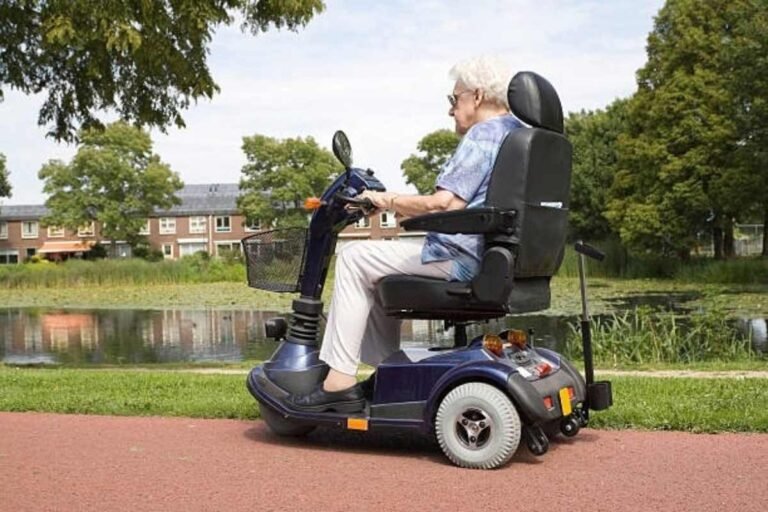
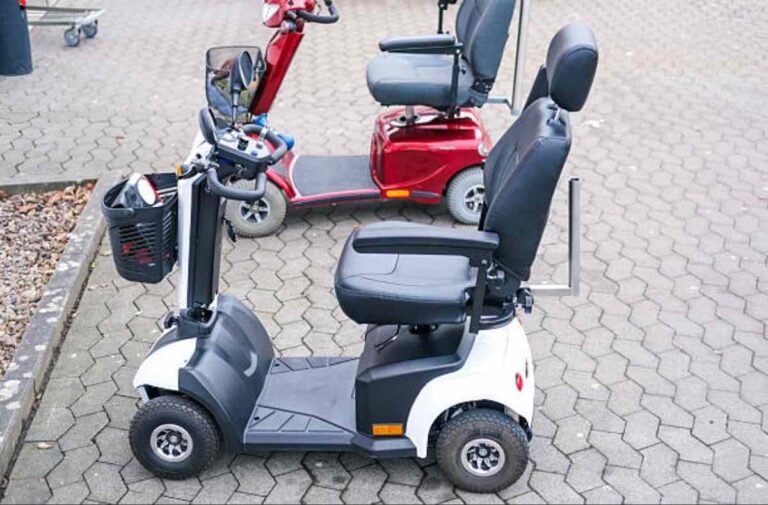
Three-wheel scooters turn tightly and feel nimble indoors, but their single front wheel means a narrower footprint. Four-wheel scooters spread weight across a wider base, which makes them a stable 4 wheel mobility scooter choice for most riders who struggle with stability. If you ride on sidewalks, grass, or uneven driveways, four wheels are usually the smarter pick for a mobility scooter for balance problems.
2. Low Center of Gravity and Anti-Tip Wheels
Look for batteries mounted low in the frame and rear anti-tip wheels. Anti-tip scooter designs add small wheels near the back that catch the frame if you go up a steep ramp or curb. They are an inexpensive layer of protection, and any mobility scooter for balance problems you seriously consider should include them.
3. Swivel Seat and Easy Transfers
Most falls happen while getting on or off, not while riding. A swivel seat scooter lets you turn the seat toward you, sit down facing forward, and then rotate into the riding position. This removes the twisting motion that triggers dizziness. A lift-up armrest on the side you board from also helps enormously.
4. Supportive Seat, Backrest, and Armrests
A high, padded backrest supports your trunk, while adjustable armrests give you something to brace against. Captain-style seats that are wide enough for comfort, but not so wide that you slide around, suit a mobility scooter for balance problems better than thin, flat seats.
5. Smooth Throttle and Speed Control
Jerky starts are risky when your equilibrium is unreliable. Choose a model with a gentle acceleration curve and an easy-to-adjust speed dial. Many riders set the speed to the lowest level for the first few weeks. A well-tuned mobility scooter for balance problems should feel predictable at every speed.
6. Weight Capacity and Seat Height
A scooter working near its weight limit handles poorly. Choose a model with comfortable headroom above your body weight. Seat height matters too. Your feet should rest flat on the floorboard with your knees bent at roughly a right angle, so you can stop and steady yourself if needed.
Our Top Picks: 7 Stable Options Compared
The table below compares seven well-known models that suit riders who need extra stability. Always confirm current specifications with the manufacturer or an authorized dealer, because models and capacities are updated from time to time.
| Model | Wheels | Stability Highlights | Best For | Approx. Weight Capacity |
|---|---|---|---|---|
| Pride Mobility Victory 10.2 | 4 | Wide base, high-back captain seat, anti-tip wheels | All-round daily use | About 400 lbs |
| Pride Mobility Go-Go Elite Traveller 4-Wheel | 4 | Light frame, easy disassembly, steady turning | Travel and small homes | About 300 lbs |
| Golden Technologies Companion HD (GC440) | 4 | Heavy-duty frame, wide stance, plush seat | Larger riders, rough paths | About 500 lbs |
| Golden Technologies Buzzaround XL | 4 | Compact, strong suspension feel, swivel seat | Indoor and outdoor mix | About 300 lbs |
| Drive Medical Scout 4 | 4 | Tight turning for a 4-wheel, swivel seat | Apartments, narrow aisles | About 300 lbs |
| Shoprider Sprinter XL4 | 4 | Stable chassis, comfortable seat, clear controls | Longer outings | About 350 lbs |
| EV Rider Transport AF+ | 4 | Folding design, lightweight, anti-tip rear wheels | Frequent travelers | About 250 lbs |
Pride Mobility Victory 10.2
The Victory 10.2 is a favorite when someone asks for a dependable mobility scooter for balance problems. The wide wheelbase, high-back seat, and adjustable tiller let riders sit upright with relaxed shoulders. It is on the larger side, so measure your doorways first.
Golden Technologies Companion HD (GC440)
If you need more capacity or extra confidence on uneven ground, this heavy-duty scooter stands out. Its broad stance and plush seat make it a strong mobility scooter for balance problems when you ride outdoors most days. It is heavy and not designed for frequent lifting into a car.
Drive Medical Scout 4
The Scout 4 balances compact size with four-wheel steadiness. The swivel seat helps riders with dizziness board without twisting, and the tight turning radius suits apartments and busy stores. For many people, it is a practical mobility scooter for balance problems in smaller living spaces.
Shoprider Sprinter XL4
Shoprider builds a reputation on comfort, and the Sprinter XL4 offers a stable chassis and clear, simple controls. Riders who do longer outings appreciate the supportive seating, which makes it a dependable mobility scooter for balance problems on extended trips.
Pride Mobility Go-Go Elite Traveller and EV Rider Transport AF+
Both are lighter, travel-friendly choices. They are better for mild to moderate stability concerns, where you want portability without giving up the four-wheel base. If your balance challenges are significant, compare them carefully against the heavier models above before deciding on a mobility scooter for balance problems.
Pros and Cons of a Mobility Scooter for Balance Problems
Pros
- Reduces the walking distance that triggers fatigue and stumbles
- Restores independence for shopping, appointments, and social visits
- Seat and backrest support your trunk while you travel
- Many models fold or disassemble for car transport
Cons
- Mounting and dismounting still require care and practice
- Larger four-wheel models need space to turn and store
- Not a substitute for rehabilitation or a proper medical evaluation
- Cost can be significant without insurance or financing help
Safety Tips for Riding a Mobility Scooter for Balance Problems
- Practice in a safe space first. An empty parking lot or a wide hallway is ideal before you head to busy sidewalks.
- Use the lowest speed setting until your reactions feel automatic.
- Approach slopes and curbs straight on, never at an angle, and slow down before turns.
- Keep both hands on the tiller and avoid reaching behind you or to the floor while seated.
- Turn the power off before getting on or off, and use the seat swivel and armrests as handholds.
- Charge the battery regularly so you are never stranded mid-trip with no way to steady yourself.
- Wear supportive, flat shoes that grip the floorboard.
Following these habits makes any mobility scooter for balance problems safer, whichever brand you choose.
How to Choose the Right Model for Your Situation
Start by listing your daily routes. A person who mostly shops indoors needs different features than someone crossing a bumpy yard. Next, think about how you will store and transport the scooter. A heavy model is wonderful on the road but frustrating if you must lift it alone.
Then consider your specific condition. Riders with vertigo or inner-ear issues often benefit from swivel seats and slow acceleration. Riders with neuropathy or weak legs may care more about floorboard space and foot support. Those recovering from a stroke may need a tiller that is easy to grip with one stronger hand. No single mobility scooter for balance problems fits everyone, which is why a professional fitting is so valuable.
Finally, test-drive at least two or three models. Sit in each one, check how easily you can reach the controls, and notice how you feel during turns and stops. The best mobility scooter for balance problems is the one your body tells you is steady.
Do You Need a Prescription or Insurance Approval?
In many places, a scooter does not require a prescription to buy privately. However, insurance programs often do ask for a medical evaluation, especially if you hope for partial coverage. An occupational therapist can assess your needs, recommend specifications, and document why a mobility scooter for balance problems is medically appropriate. Even if you pay out of pocket, that assessment can save you from an expensive mistake.
Mobility Scooter for Balance Problems: Frequently Asked Questions
Is a three-wheel or four-wheel scooter better for balance problems?
For most riders, four wheels provide a wider, steadier base. Three-wheel models turn more tightly but are usually less stable at speed or on slopes, so a four-wheel mobility scooter for balance problems is generally the safer recommendation.
Can I ride a scooter if I have vertigo or dizzy spells?
Many people with vertigo use a mobility scooter for balance problems successfully, but you should speak with your doctor first. Features like a swivel seat, slow acceleration, and a supportive backrest help. If dizziness strikes suddenly and severely, riding may not be safe until your condition is managed.
What is an anti-tip scooter, and do I need one?
It is a scooter with small rear wheels that stop the frame from tipping backward on inclines or curbs. They are strongly recommended for any mobility scooter for balance problems.
How fast should a scooter go for someone with poor balance?
Slower is safer while you learn. Most models top out around four to five miles per hour, and you can set a lower limit. Begin at the lowest setting and increase only when you feel completely comfortable.
Will Medicare or insurance pay for a scooter?
Coverage for a mobility scooter for balance problems depends on your country, plan, and medical documentation. In the United States, Medicare may cover part of the cost if a doctor documents medical need, but rules change, so check with your plan before you buy.
Can a scooter make my balance worse by reducing walking?
Riding should complement, not replace, your therapy and exercise. Ask your physical therapist how to balance scooter use with strengthening work so you stay as strong as possible.
Final Thoughts
Living with unsteady balance does not mean giving up the places and people you love. The right scooter widens your world again while keeping you safer than walking alone on shaky legs. Focus on a four-wheel base, anti-tip protection, a swivel seat, and smooth controls. Compare the models above, book a test-drive, and involve your healthcare team in the final decision.
If you take one thing from this guide, let it be this: the best mobility scooter for balance problems is the one that fits your body, your home, and your daily life, so take your time and choose with confidence.