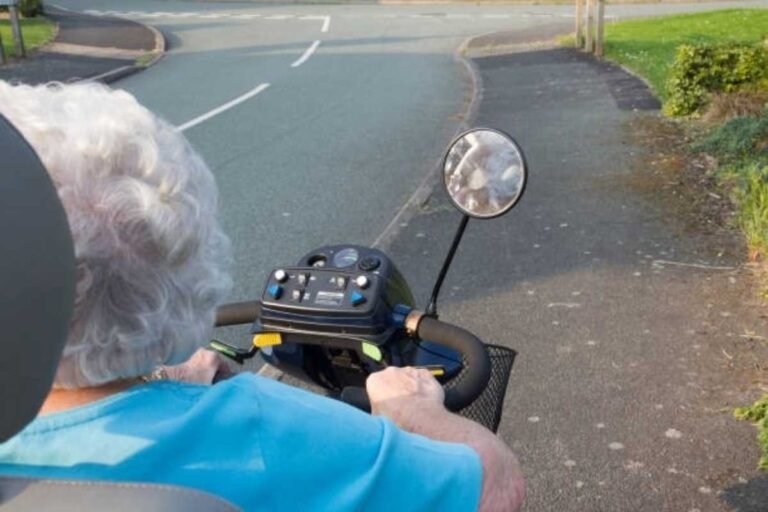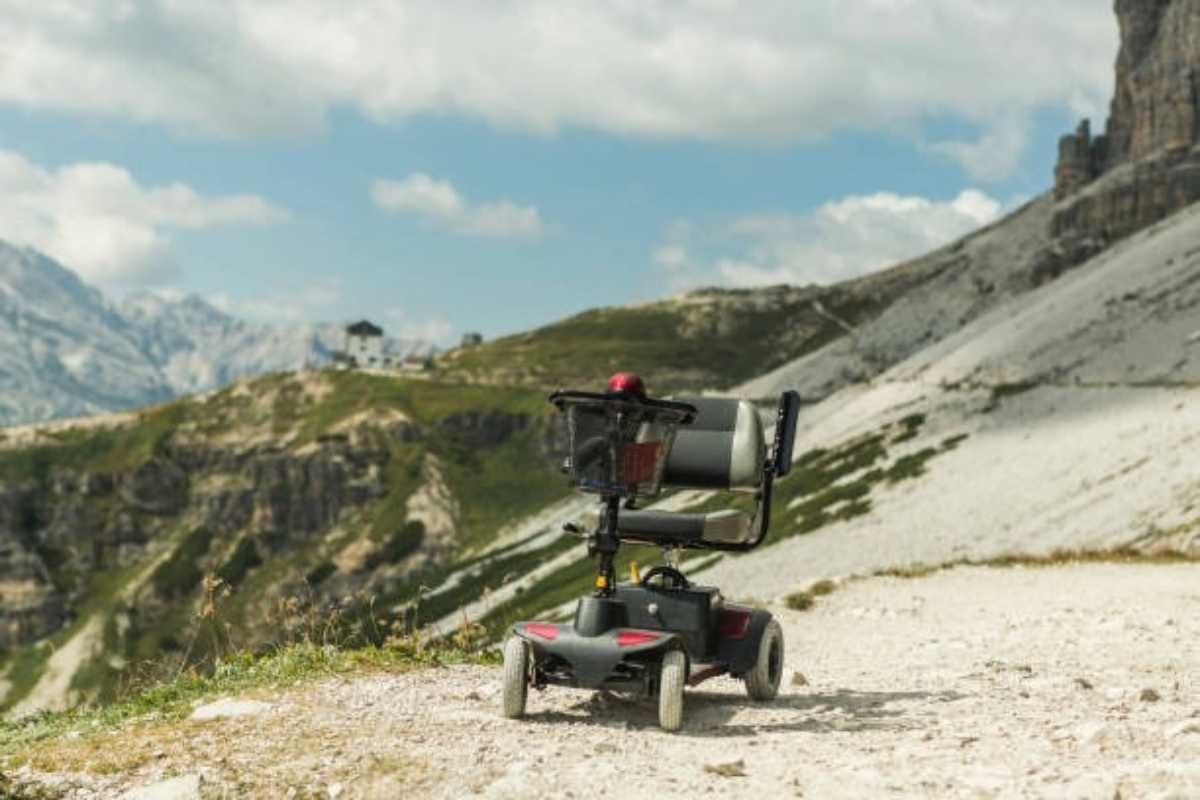
Living with a steep driveway, a sloped sidewalk or a hilly neighborhood changes how you shop. A flat-ground scooter that feels perfect in a showroom can crawl, stall or even feel unsafe the moment the ground tilts upward. Choosing the right mobility scooter for hills is less about top speed and more about motor power, battery strength, weight distribution and braking. This guide explains exactly what to look for, which models handle slopes best, and how to stay safe on every climb and descent.
Why a Mobility Scooter for Hills Needs Different Features
Most entry-level travel scooters are designed for malls, pavements and indoor spaces. They use small motors and compact batteries to keep the weight low. That is great for portability, but it is the opposite of what a mobility scooter for hills requires. When you climb, the motor must work against gravity as well as the weight of the rider, so every pound and every degree of slope matters.
A dependable mobility scooter for hills typically has a stronger motor, a larger battery, larger wheels and a longer wheelbase. These traits keep power delivery steady, prevent the front end from lifting, and reduce the chance of tipping backward on a steep section. If you plan to use your scooter daily on slopes, it is worth paying more for these features instead of buying the lightest model on the market.
Understanding Gradient Ratings Before You Buy
Manufacturers usually list a maximum climbing angle in degrees or as a percentage gradient. A rating of 6 degrees is gentle, 8 to 10 degrees is solid for typical neighborhood slopes, and anything above 10 degrees is suited to heavy-duty models. Keep in mind that the published number is tested under ideal conditions: a fully charged battery, a rider at a specific weight and a smooth, dry surface.
In real life, a wet road, a worn battery or a heavier rider reduces the effective gradient your scooter can handle. As a rule of thumb, choose a mobility scooter for hills with a gradient rating at least two to three degrees higher than the steepest slope you expect to climb regularly. That safety margin protects your motor and keeps you in control.
How to Measure Your Own Slope
You do not need special tools. Place a long, straight board on the slope, set a smartphone level app on it and read the angle. Alternatively, many free inclinometer apps do the same job in seconds. Knowing your real slope helps you narrow down the right mobility scooter for hills before you spend any money.
6 Key Features to Look For
1. Motor Power and Torque
Motor strength is the single biggest factor in climbing performance. Look for models marketed as heavy-duty or all-terrain, because their motors are tuned for torque rather than just speed. A strong motor also runs cooler on long climbs, which extends its lifespan.
2. Battery Capacity
Hills drain batteries faster than flat ground, which is why every mobility scooter for hills needs a generous battery. A larger amp-hour rating gives your scooter the reserve it needs to climb repeatedly without losing power. If your daily route includes several slopes, treat battery capacity as seriously as motor size when comparing any mobility scooter for hills.
3. Wheel Count and Wheelbase
Four-wheel scooters are generally more stable than three-wheel designs, especially when traversing a slope sideways or descending. A longer wheelbase spreads weight more evenly and resists backward tipping. For steep terrain, a four-wheel layout is usually the smarter choice.
4. Anti-Tip Wheels
Small rear wheels, known as anti-tip wheels, sit just behind the main wheels and catch the scooter if it begins to tilt backward. They are a vital safety feature on any hill climbing mobility scooter, and you should confirm they are included before purchasing.
5. Ground Clearance and Tires
Better ground clearance on a mobility scooter for hills prevents the underside from scraping on steep transitions, such as where a driveway meets the road. Pneumatic (air-filled) tires also grip better than solid tires and absorb bumps that would otherwise unsettle the scooter mid-climb.
6. Braking System
Descending can be more dangerous than climbing. A reliable electromagnetic brake that engages automatically when you release the throttle is essential. Combined with a regenerative or dynamic braking feel, it keeps your speed controlled on the way down.
5 Best Options Compared
The table below summarizes five well-known models that riders often consider when shopping for a mobility scooter for hills. Specifications change between production years, so always confirm exact figures on the manufacturer’s page before buying.
| Model | Type | Hill Suitability | Terrain Strength | Best For |
|---|---|---|---|---|
| Pride Baja Wrangler 2 | Heavy-duty 4-wheel | Excellent | Rough ground, steep slopes | Daily hilly use, larger riders |
| Pride Baja Raptor 2 | Heavy-duty 4-wheel | Excellent | Outdoor trails, uneven surfaces | Active riders with long routes |
| Pride Victory 10.2 | Full-size 4-wheel | Very good | Sloped sidewalks, mild hills | Everyday neighborhood travel |
| EV Rider TransPorter | Portable 4-wheel | Moderate | Gentle slopes | Light hills plus easy transport |
| Golden Buzzaround EX | Travel 3-wheel | Light to moderate | Short ramps, mild inclines | Occasional slopes, travel use |
Detailed Reviews
Pride Baja Wrangler 2: Best Overall Mobility Scooter for Hills
If your daily route includes genuine slopes, the Baja Wrangler 2 is one of the strongest candidates. Its heavy-duty frame, large pneumatic tires and powerful drive system are built for rough, uneven and sloped ground. The longer wheelbase also gives a planted, confident feel, which matters when you are halfway up a steep section. For anyone who needs a mobility scooter for hills as a main mode of transport, this model sits at the top of the shortlist.
Pros: Strong climbing ability, excellent stability, rugged tires, suited to heavier riders. Cons: Large and heavy, difficult to transport without a vehicle lift, higher price.
Pride Baja Raptor 2: Best for Active Outdoor Riders
The Baja Raptor 2 shares the rugged character of the Wrangler and focuses on riders who spend long hours outdoors. It handles uneven paths and slopes with the kind of grip you expect from a purpose-built mobility scooter for hills. The comfortable seating and good suspension feel also reduce fatigue on longer trips.
Pros: Great traction, comfortable ride, dependable on mixed terrain. Cons: Bulky design, needs generous storage space, not ideal for indoor use.
Pride Victory 10.2: Best Balance of Comfort and Capability
For riders whose slopes are moderate rather than extreme, the Victory 10.2 offers a smart middle ground. It is a full-size four-wheel scooter with a stable platform and comfortable seat. While it is not an off-road machine, it is a reasonable mobility scooter for hills of the sort found on typical suburban streets.
Pros: Comfortable, stable, widely available, sensible price. Cons: Not designed for very steep or rough slopes, heavier than travel models.
EV Rider TransPorter: Best Portable Option for Gentle Slopes
The TransPorter appeals to people who want to transport their scooter in a car yet still manage the occasional rise. It will not compete with the Baja models on steep terrain, but it can serve as a practical mobility scooter for hills when the gradient is light. Be realistic about its limits and avoid pushing it on long, steep climbs.
Pros: Easy to disassemble, lighter to lift, good for travel. Cons: Limited climbing power, smaller battery reserve under heavy load.
Golden Buzzaround EX: Best for Occasional Mild Inclines
The Buzzaround EX is a popular compact scooter, valued for its maneuverability. It copes with ramps and gentle inclines but is not what most people would call a true mobility scooter for hills. Choose it only if your slopes are short and mild, and your priority is portability.
Pros: Compact, easy to maneuver, simple to travel with. Cons: Light motor for serious slopes, three-wheel layout is less stable on steep ground.
Pros and Cons of Owning a Mobility Scooter for Hills
Pros
- Restores independence in hilly neighborhoods that would otherwise be difficult to navigate
- Stronger motors and batteries often mean a longer service life
- Better stability features improve rider confidence and safety
- Larger tires deliver a smoother, more comfortable ride on uneven ground
Cons
- Heavy-duty models cost more than standard scooters
- Larger frames are harder to store and transport
- Bigger batteries take longer to charge
- Not every model fits inside a small vehicle without a lift
Safety Tips for Riding on Slopes
Even the best mobility scooter for hills needs a careful rider. Follow these habits to stay safe:
- Approach slopes straight on. Climbing or descending at an angle increases the risk of tipping sideways.
- Keep a steady throttle. Avoid sudden acceleration on a climb, which can lift the front wheels.
- Lean slightly forward when going uphill. This shifts weight over the front and keeps the scooter planted.
- Use the lowest speed setting when descending. Slow, controlled movement is safer than relying on the brakes alone.
- Never stop halfway up a steep slope if you can avoid it. Restarting on an incline strains the motor.
- Avoid wet or icy slopes. Traction drops sharply, and no mobility scooter for hills is immune to slipping.
- Check your battery before leaving home. A weak battery can fail precisely when you need power most.
Maintenance Tips for Hill Use
Steep terrain puts extra stress on your scooter, so maintenance matters more than usual. Check tire pressure weekly, since low pressure reduces grip and increases motor strain. Inspect brakes regularly and have them serviced if you notice any lag. Charge the battery after every ride rather than letting it drain completely, and store it in a cool, dry place. A well-maintained mobility scooter for hills will reward you with years of reliable service.
How to Choose the Right Model for Your Situation
When choosing a mobility scooter for hills, start by writing down your steepest slope, your weight, the distance you travel daily and how you plan to transport the scooter. If your slopes are steep and frequent, choose a heavy-duty four-wheel model and accept that transport will need planning. If your slopes are gentle and you travel often, a portable model may be enough. Always leave a margin of capacity, because buying a mobility scooter for hills that is only just adequate means constant strain on the motor and shorter battery life.
Try to test-ride before buying where possible. Many local mobility dealers allow short demonstrations, and the feel of the seat, tiller and brakes on a real incline tells you more than any spec sheet.
Frequently Asked Questions
What is the best mobility scooter for hills?
For genuinely steep terrain, heavy-duty four-wheel models like the Pride Baja Wrangler 2 and Baja Raptor 2 are typically the strongest choices. For moderate slopes, the Pride Victory 10.2 is a sensible alternative.
How steep a hill can a mobility scooter climb?
Most standard scooters handle around 6 to 8 degrees, while heavy-duty models can manage 10 degrees or more. Always check the manufacturer rating and leave a safety margin.
Can a three-wheel scooter handle slopes?
Light slopes, yes. For steep or frequent climbs, a four-wheel design provides better stability and is generally the safer choice as a mobility scooter for hills.
Do hills drain a scooter battery faster?
Yes. Climbing requires more power, so range drops compared with flat ground. Choose a larger battery if hills are part of your daily route.
Is it safe to go downhill on a mobility scooter?
It is safe when done carefully. Use a low speed setting, keep a steady hand and rely on the automatic electromagnetic brake rather than sudden manual stopping.
How can I find the right mobility scooter for hills on a budget?
Compare gradient ratings, motor power and battery size rather than price alone. A slightly older heavy-duty model often outperforms a newer lightweight one on slopes.
Final Verdict
Hills should not limit your independence. By focusing on motor strength, battery capacity, anti-tip protection and stability, you can find a mobility scooter for hills that makes your daily routes feel effortless instead of stressful. For serious slopes, the Pride Baja Wrangler 2 and Baja Raptor 2 lead the pack. For moderate terrain, the Pride Victory 10.2 offers an excellent balance. Take your time, measure your slopes honestly and choose a mobility scooter for hills with a little more power than you think you need. Your future self will thank you on every climb.