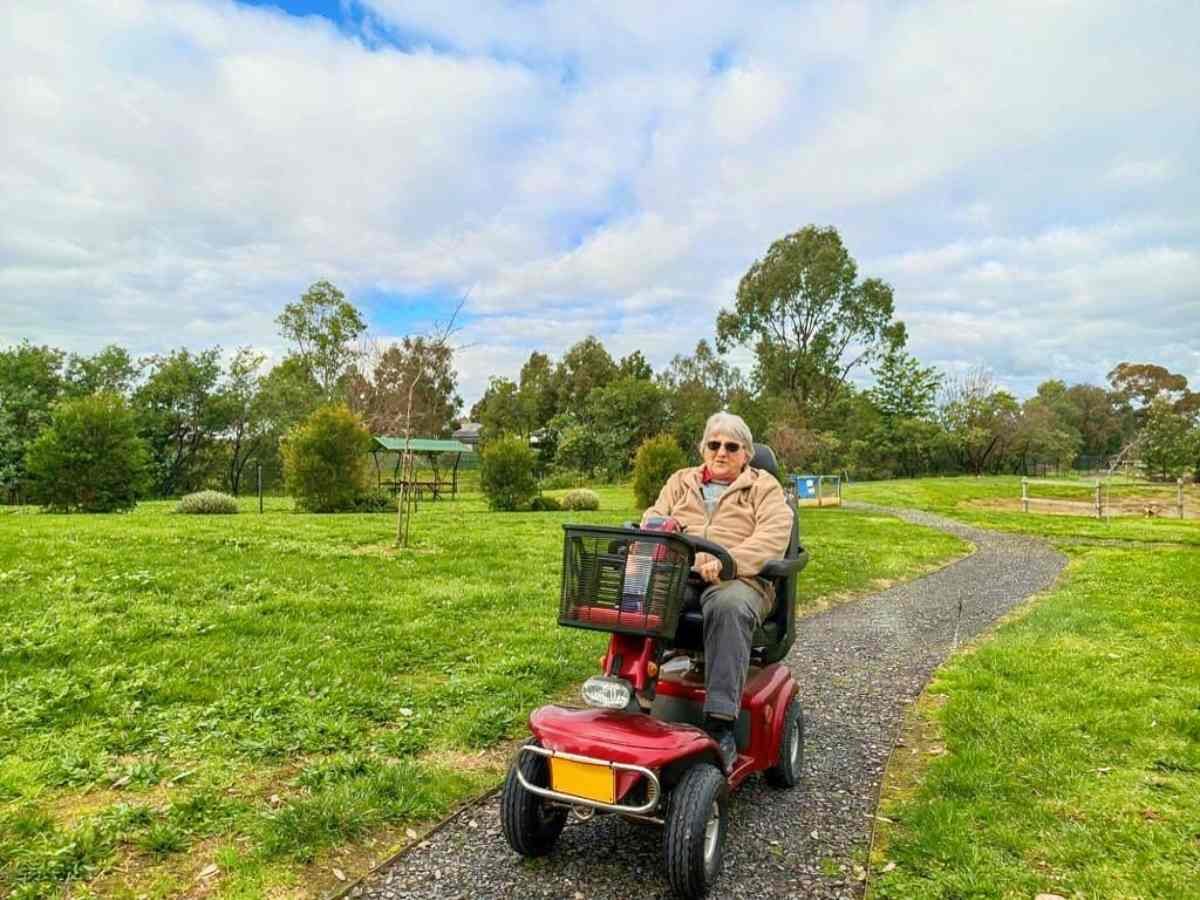
Regular mobility scooters are built for sidewalks and smooth flooring — the moment you hit grass, gravel, or an uneven trail, most of them struggle. The best all-terrain mobility scooters are a different category entirely: bigger tires, real ground clearance (generally 5 inches or more), front-and-rear suspension, and motors strong enough to handle inclines that would stall a standard scooter. After comparing ground clearance, suspension, range, and real owner feedback across six established all-terrain models, here’s how they actually stack up.
Quick Comparison Table
| Scooter | Best For | Ground Clearance | Weight Capacity | Range |
|---|---|---|---|---|
| Pride Baja Wrangler 2 | Toughest off-road terrain | 8.25″ mid-frame | 450 lbs | Up to 26.6 miles |
| Golden Technologies Eagle 4-Wheel | Best value all-terrain | 5″ | 500 lbs | Up to 32 miles |
| Red Elephant Heavy-Duty | Longest range and top speed | Not specified, large flat-free tires | 500 lbs | Up to 43 miles |
| Heartway Vita Monster S12X | Strongest hill-climbing power | Not specified | 350 lbs | Moderate |
| Green Transporter Cheeta Ninja | Golf courses and turf | Turf-tire optimized | Standard | Up to 25 miles |
| AFIKIM Afiscooter S4 | Reliability and incline rating | 5″ | 500 lbs | 36-38 miles |
Pride Baja Wrangler 2 (BA401)
The Baja Wrangler 2 is Pride’s answer to genuinely rough terrain, not just uneven sidewalks. Dual 24-volt motors, an 8.25-inch mid-frame ground clearance, and Comfort-Trac front-and-rear suspension put it in a different league from most “outdoor” scooters that are really just standard scooters with bigger tires.
- 450 lb weight capacity
- 8.25″ ground clearance at mid-frame (5.5″ at the motor)
- Dual motors, up to 11.4 mph top speed
- Up to 26.6 miles of range with upgraded 100AH batteries
- CTS front and rear suspension with a steering dampening stabilizer
- 14.5″ tubeless pneumatic tires built for mud, gravel, and uneven trails
Best For: Riders who genuinely need to cross rough, unpredictable ground — gravel trails, rutted paths, campsites — not just grass and light gravel.
Watch Out For: This is a premium, purpose-built off-road scooter, and it’s priced accordingly — expect to pay well above a standard heavy-duty scooter for this level of capability.
Pros:
- Genuinely the most capable ground clearance and suspension in this comparison
- Dual-motor power handles inclines that stall lighter scooters
- Made in the USA with a reputation for rugged reliability
Cons:
- Highest price point of the scooters compared here
- Total weight (up to 395 lbs with batteries) makes transport a two-person job
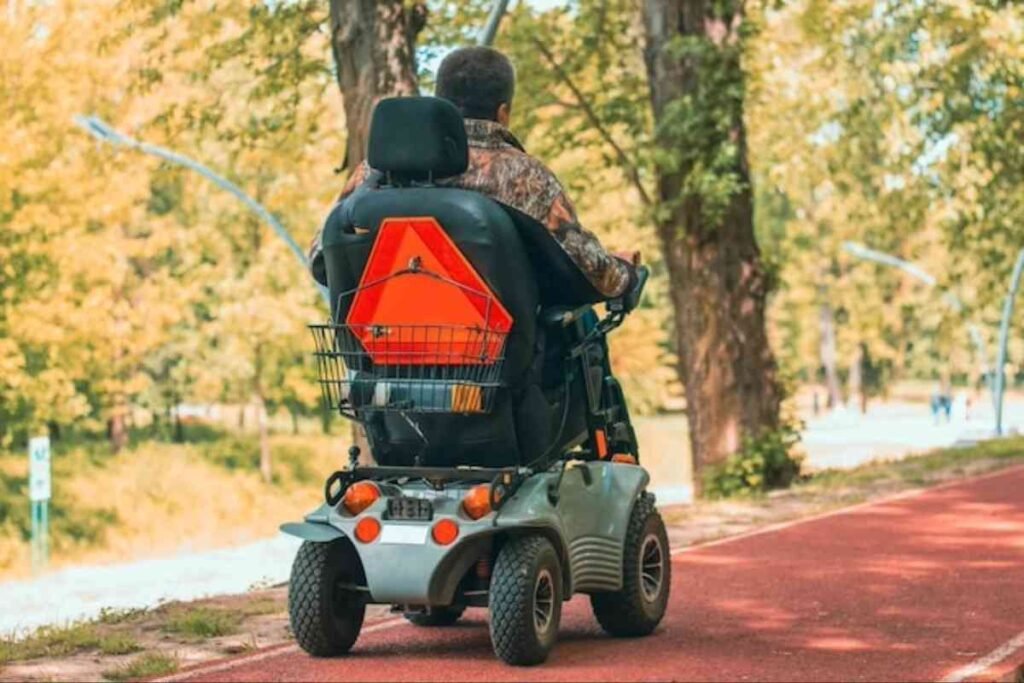
Golden Technologies Eagle 4-Wheel (GR595)
The Eagle strikes a balance the Baja Wrangler 2 doesn’t try to: strong outdoor capability at a noticeably more accessible price, without sacrificing the core features that make a scooter genuinely all-terrain.
- 500 lb weight capacity
- 5″ ground clearance
- 13″ pneumatic tires with front and rear suspension
- 140 Amp controller for strong climbing ability
- Up to 32-mile range with optional 75AH batteries
- Built-in Bluetooth speaker, USB charging, and full LED lighting
Best For: Riders who want real all-terrain capability — hills, grass, uneven ground — without paying Baja Wrangler-level premium pricing.
Watch Out For: The 8 mph top speed is noticeably slower than several competitors here, which matters if covering distance quickly is a priority.
Pros:
- Strong balance of capability and price for genuine outdoor use
- High weight capacity matched with a comfortable 20″ wide seat
- Entertainment and convenience features rare at this price point
Cons:
- Slower top speed than the Red Elephant or Vita Monster S12X
- Ground clearance is solid but lower than the Baja Wrangler 2’s
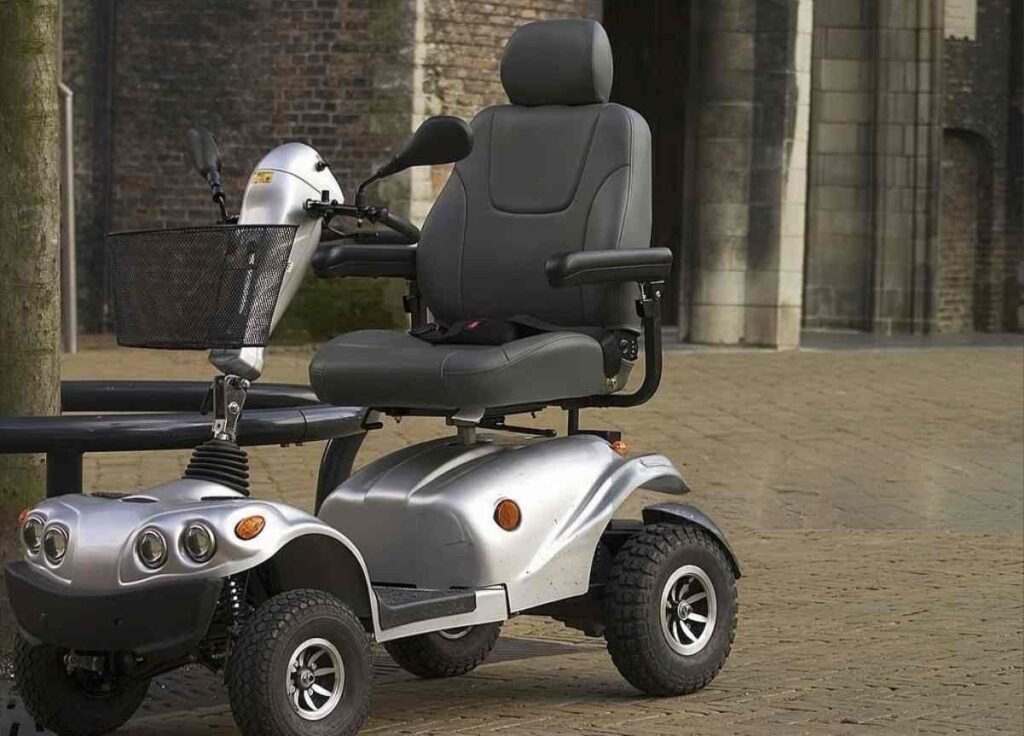
Red Elephant Heavy-Duty Mobility Scooter
If range and speed are the priority, the Red Elephant stands out from the rest of this list. A 43-mile range and 15 mph top speed are both class-leading figures among heavy-duty outdoor scooters.
- 500 lb weight capacity
- Up to 43-mile range per charge
- Top speed of 15 mph
- 14″ front and 16″ rear flat-free suspension tires
- Front and rear headlights, rear basket included
Best For: Riders who cover long outdoor distances regularly and want the range and speed to match, not just the ruggedness.
Watch Out For: Flat-free tires reduce puncture risk but generally offer a firmer ride than pneumatic tires on rougher terrain — a trade-off worth test-riding before you decide.
Pros:
- Best-in-class range and speed among this comparison
- High weight capacity paired with genuine outdoor-ready tires
- Straightforward, well-equipped build without unnecessary extras
Cons:
- Ground clearance specs are less clearly documented than competitors like the Eagle or Baja Wrangler 2
- Heavier overall unit (257 lbs) that isn’t built for easy disassembly
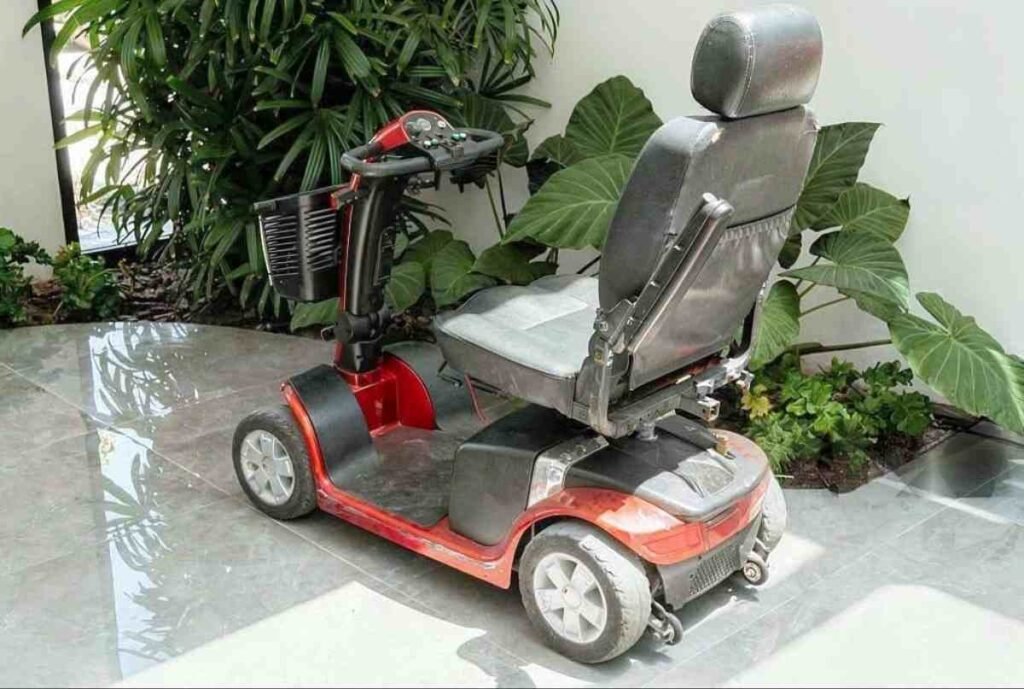
Heartway Vita Monster S12X
The Vita Monster earns its name from raw power — a 900-watt motor and 200 Amp S-Drive controller give it some of the strongest climbing performance in this comparison, aimed squarely at hillier or more demanding outdoor terrain.
- 900-watt motor with 200 Amp S-Drive controller
- 350 lb weight capacity
- LCD control panel display and rearview mirrors
- Adjustable tiller for rider comfort
- All-terrain capable design for varied outdoor surfaces
Best For: Riders on hillier terrain who prioritize motor power and climbing ability over maximum weight capacity.
Watch Out For: At 350 lbs, the weight capacity is meaningfully lower than the Eagle, Red Elephant, or AFIKIM S4 — check this carefully if you’re near that limit.
Pros:
- Strong, purpose-built motor and controller for genuine hill-climbing
- Useful visibility features (LCD display, rearview mirrors) less common at this tier
- Solid reputation for all-terrain reliability
Cons:
- Lower weight capacity than most other scooters on this list
- Heavier unit (330 lbs) relative to its capacity

Green Transporter Cheeta Ninja
Not every all-terrain need involves rough backcountry trails. The Cheeta Ninja is built with a more specific outdoor use case in mind: golf courses, parks, and turf, where off-road turf tires matter more than maximum ground clearance.
- Off-road turf tires suited to grass and park terrain
- Up to 25-mile range
- Top speed of 14 mph
- Swivel seat for easier on/off access
- Ample storage space built in
Best For: Riders whose “all-terrain” use is mainly golf courses, parks, and grassy areas rather than rocky or rutted trails.
Watch Out For: Turf-optimized tires perform differently on gravel or rocky terrain than dedicated off-road tires like the Baja Wrangler 2’s — match the tire type to where you’ll actually ride.
Pros:
- Purpose-matched tires for turf and grass rather than a generic all-terrain compromise
- Fast top speed for covering larger outdoor spaces like golf courses
- Swivel seat adds practical everyday convenience
Cons:
- Less suited to rocky, rutted, or genuinely rough backcountry terrain
- Lower weight capacity than the heavy-duty options on this list
AFIKIM Afiscooter S4
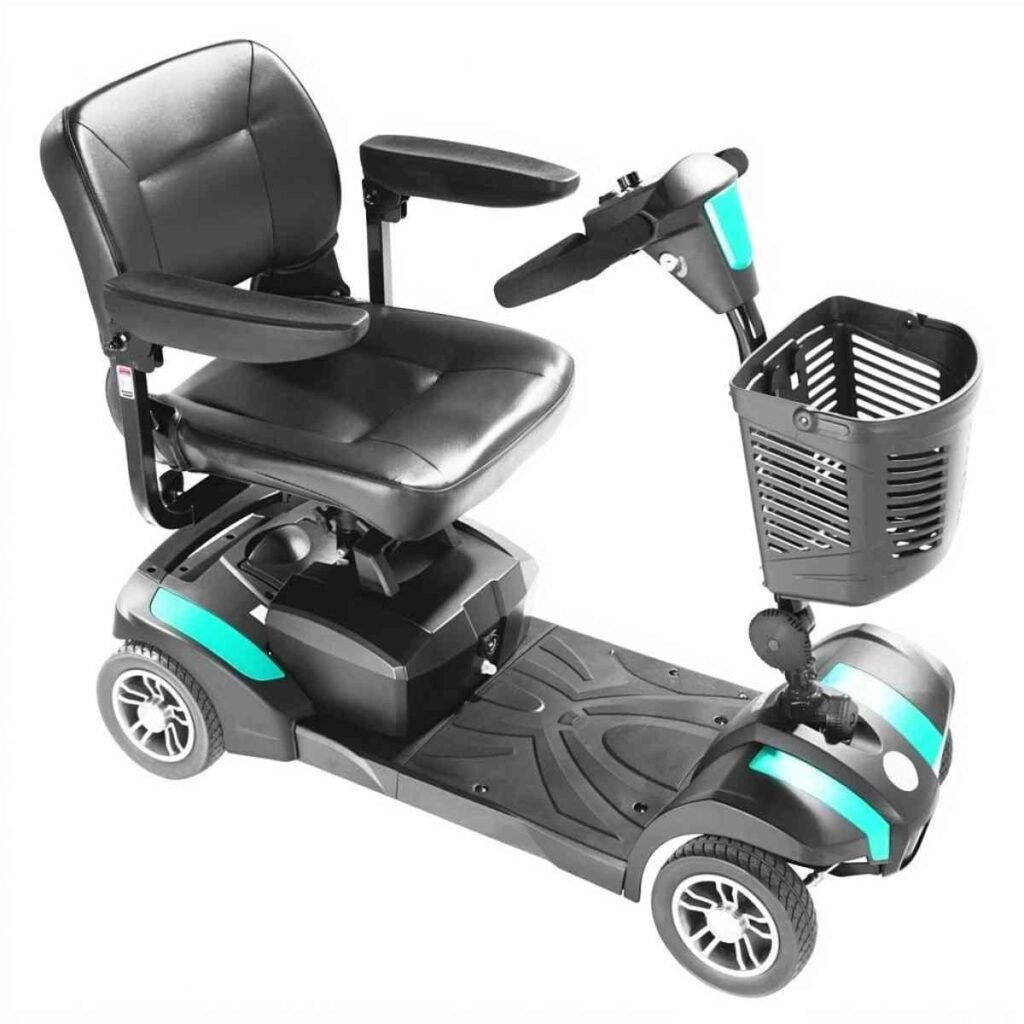
The Afiscooter S4 shows up across multiple mobility scooter categories for a reason — a 1400-watt motor, 500 lb capacity, and a strong 11.3-degree incline rating make it a genuinely versatile all-terrain performer, not a specialist in one narrow use case.
- 500 lb weight capacity
- 1400-watt motor with an 11.3-degree incline rating
- 5″ ground clearance
- 36-38 mile range per charge
- Reputation for durability across owner reports
Best For: Riders who want one scooter that handles a genuine mix of terrain types — grass, gravel, moderate hills — reliably, rather than optimizing hard for one specific condition.
Watch Out For: It doesn’t out-spec the Baja Wrangler 2 on ground clearance or the Red Elephant on range — its strength is balance across categories rather than leading in any single one.
Pros:
- Strong, well-rounded performance across multiple terrain types
- Solid incline rating backed by a genuinely powerful motor
- Established reputation for long-term durability
Cons:
- Doesn’t lead the comparison in any single spec category
- Premium pricing relative to mid-range all-terrain competitors
How to Choose the Right All-Terrain Mobility Scooter
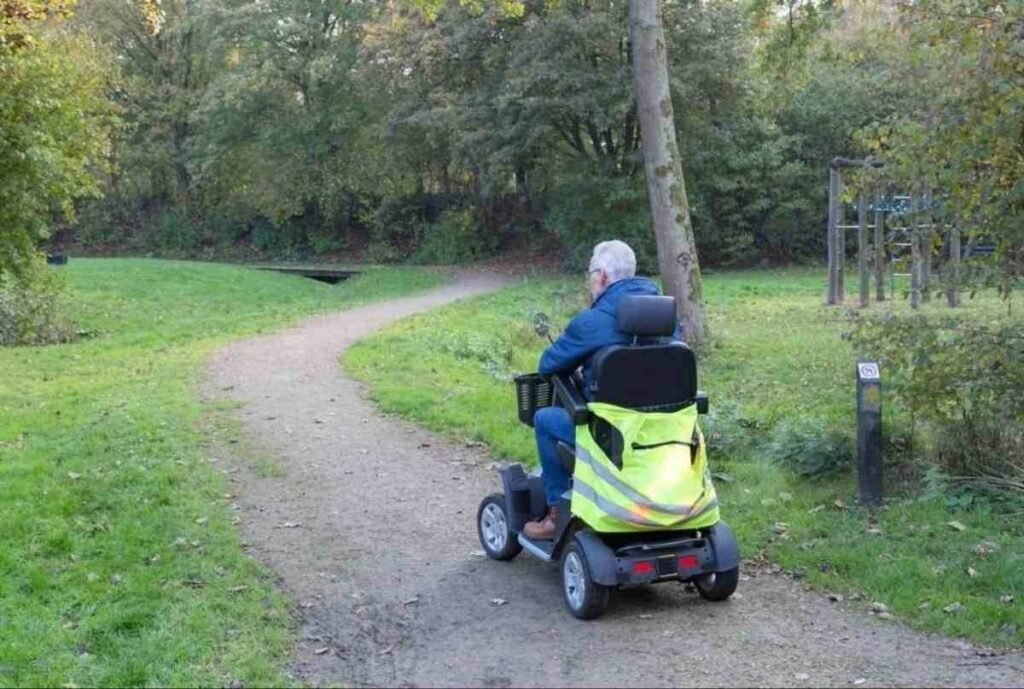
Ground clearance is the single most telling spec. Most sources that define “all-terrain” use 5 inches of ground clearance as the baseline. If a scooter is marketed as all-terrain but doesn’t list this number clearly, that’s worth asking about directly before buying.
Match tires to your actual terrain. Turf tires (like the Cheeta Ninja’s) suit grass and golf courses. Aggressive pneumatic tires (like the Baja Wrangler 2’s) suit gravel, mud, and rutted trails. The wrong tire type on the wrong surface undercuts even a well-built scooter.
Suspension matters as much as tires. Front-and-rear suspension absorbs the jolts that flat ground doesn’t produce but bumpy terrain does constantly. A scooter with great tires but no suspension will still feel harsh on rough ground.
Incline rating for hilly areas. If your outdoor terrain includes real hills, check the specific incline rating and motor wattage rather than assuming any “heavy-duty” scooter can handle it — the Vita Monster S12X and Afiscooter S4 both call out this spec directly for a reason.
Range vs. speed vs. weight capacity — pick two. Few all-terrain scooters lead in all three at once. The Red Elephant prioritizes range and speed, the Baja Wrangler 2 prioritizes ground clearance and capacity, and the Eagle balances features against price. Decide which trade-off fits your actual outdoor routine.
Total weight and storage. All-terrain scooters are generally heavier than standard or folding models, given the reinforced frames and larger batteries involved. Confirm your storage space and vehicle can accommodate the unit before buying, since most of these aren’t designed to fold.
Why Comparing These Scooters Carefully Actually Matters
When people first start researching outdoor mobility options, they’re often surprised by how differently scooters behave once ground clearance and suspension actually get tested on rough terrain. Not every rugged-looking model qualifies among the best all-terrain mobility scooters, since the difference usually comes down to a handful of measurable specs rather than marketing photos. The best all-terrain mobility scooters generally share three traits: real ground clearance, dual suspension, and a motor strong enough to keep climbing rather than stalling out on an incline.
Comparing six models side by side made it clear that the best all-terrain mobility scooters aren’t always the most expensive ones, but the ones where every listed spec actually holds up against real terrain. That gap between marketing claims and real performance is exactly why narrowing down the best all-terrain mobility scooters takes more research than picking a standard sidewalk scooter. Riders who skip that research often end up with a scooter that looks the part but isn’t genuinely one of the best all-terrain mobility scooters once it meets an actual gravel trail.
Once you’ve narrowed down what your outdoor terrain actually looks like, comparing the best all-terrain mobility scooters becomes much easier than it first appears. Riders dealing with rocky, rutted trails usually lean toward the Baja Wrangler 2 when picking from the best all-terrain mobility scooters, since its ground clearance and suspension are built for exactly that kind of ground. Riders who mostly need grass and golf-course terrain often find that the best all-terrain mobility scooters for their situation are lighter, turf-tire models like the Cheeta Ninja rather than a heavier off-road machine.
Budget also plays a real role in which of the best all-terrain mobility scooters ends up being the practical choice, since premium ground clearance and dual motors come at a real price difference. Whichever direction you lean, testing a shortlist of the best all-terrain mobility scooters against your actual terrain, weight, and budget will get you to the right pick faster than chasing spec sheets alone.
Frequently Asked Questions
What ground clearance do the best all-terrain mobility scooters have? Most all-terrain mobility scooters are defined by roughly 5 inches or more of ground clearance, with some premium models like the Pride Baja Wrangler 2 exceeding 8 inches at mid-frame.
Can an best all-terrain mobility scooters handle hills? Yes, though incline capability varies by motor power and controller — scooters like the Heartway Vita Monster S12X and AFIKIM Afiscooter S4 are specifically built with stronger motors and documented incline ratings for hillier terrain.
How far can an best all-terrain mobility scooter travel on one charge? Range varies significantly by model, from around 25 miles on turf-focused scooters up to 43 miles on longer-range options like the Red Elephant Heavy-Duty.
Are best all-terrain mobility scooters heavier than standard scooters? Generally yes. The reinforced frames, larger batteries, and suspension systems needed for rough terrain add weight compared to standard or folding mobility scooters, often putting total weight well over 250 lbs.
Do best all-terrain mobility scooters work on grass and golf courses? Yes, though the tire type matters — turf-optimized tires like those on the Green Transporter Cheeta Ninja are specifically suited to grass and golf courses, while heavier tread tires suit rockier terrain better.
What weight capacity should I look for in an all-terrain scooter? Weight capacity among established all-terrain scooters typically ranges from 350 to 500 lbs, so it’s worth confirming this figure against your own weight with a buffer, the same as with any mobility scooter purchase.
Final Verdict
When it comes to choosing the best all-terrain mobility scooters, the right pick depends on where and how you plan to use it most. If your daily routes include gravel paths, grassy parks, or uneven sidewalks, investing in a model with larger tires, solid suspension, and a higher ground clearance will make a noticeable difference in comfort and control.
Weight capacity and battery range matter just as much as terrain handling — a scooter that struggles on hills or runs out of charge mid-trip defeats the purpose of going all-terrain. Look for models with dual motors or higher torque ratings if you regularly navigate inclines or rougher outdoor conditions.
Ultimately, the best all-terrain mobility scooters strike a balance between rugged performance and everyday usability. Before buying, test the scooter on terrain similar to what you’ll actually use, confirm the warranty covers outdoor wear and tear, and make sure it folds or transports easily if you need to take it along on trips. the same one.


One Comment