Not every mobility scooter is built for the same ground. A scooter that glides smoothly across a tile floor might struggle badly on gravel, grass, or a cracked sidewalk. That’s why understanding mobility scooter terrain capability is one of the most important things to research before you spend your money. In this guide, we’ll break down what terrain capability actually means, which features affect it most, how popular brands compare, and how to pick a scooter that matches the surfaces you’ll actually be riding on every day.
What Does Terrain Capability Actually Mean?
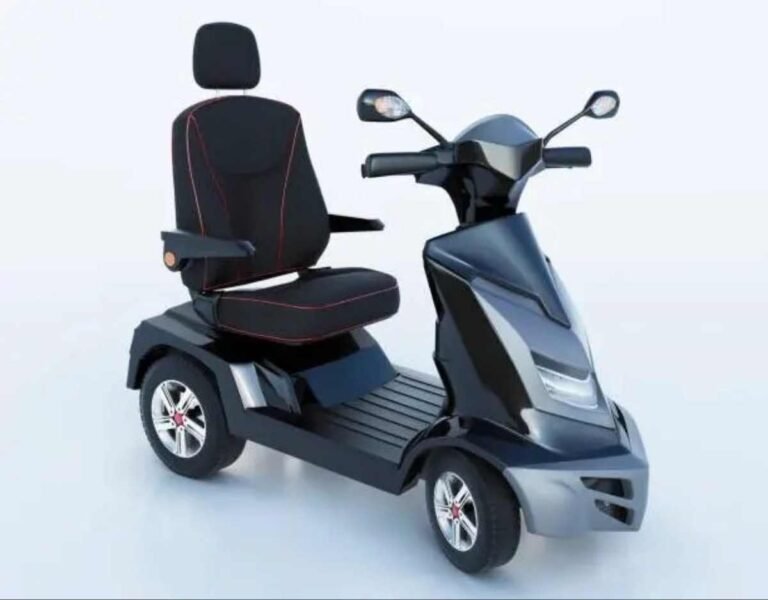
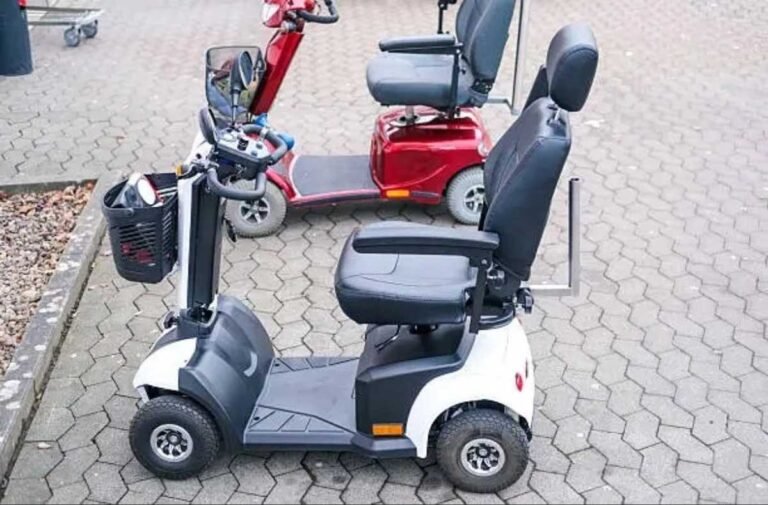
Mobility scooter terrain capability refers to how well a scooter handles different surfaces: smooth indoor flooring, outdoor pavement, grass, gravel, curbs, ramps, and uneven ground. A scooter designed purely for indoor use will usually have small wheels and a low ground clearance, which is fine for hallways but risky on anything rougher. On the other hand, a scooter built with strong mobility scooter terrain capability in mind will have larger wheels, better suspension, and more ground clearance to absorb bumps and dips.
Buyers often assume that any scooter can handle any surface, but that’s rarely true. If you live somewhere with a gravel driveway, grassy yard, or older sidewalks with cracks and tree roots, mobility scooter terrain capability should be one of the very first things you check, not an afterthought.
Key Features That Affect Terrain Capability
Several design elements directly influence mobility scooter terrain capability. Understanding these will help you read spec sheets more accurately.
- Wheel size: Larger wheels, typically 10 inches or more, roll over bumps and small obstacles more easily than smaller wheels.
- Ground clearance: Higher clearance reduces the chance of the scooter’s underside scraping on uneven ground or curbs.
- Suspension type: Full suspension systems absorb shock from rough terrain far better than scooters with no suspension at all.
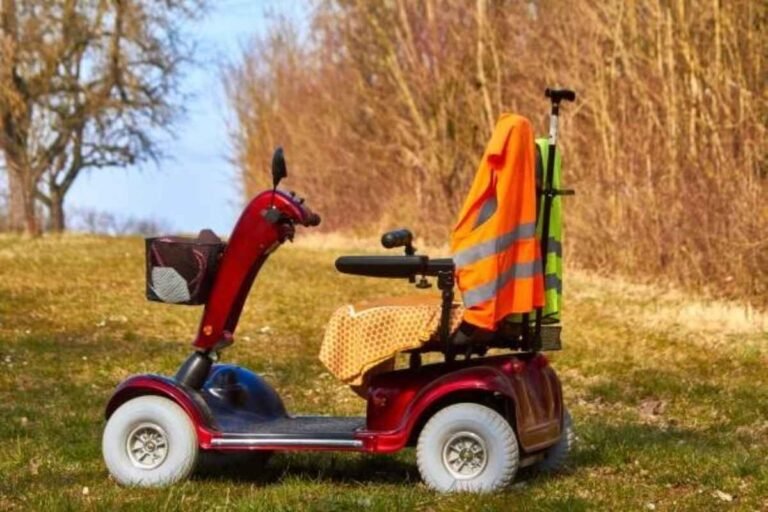
- Tire type: Pneumatic (air-filled) tires generally handle rough or soft ground better than solid foam tires, though foam tires need less maintenance.
- Motor power: A stronger motor helps maintain speed and control when climbing inclines or crossing soft surfaces like grass or dirt.
- Weight distribution: A well-balanced frame prevents tipping when the scooter is angled on a slope or uneven patch of ground.
Each of these factors plays a role in mobility scooter terrain capability, and the best scooter for you depends on which combination matters most for your daily environment.
Indoor, Outdoor, and All-Terrain Categories
Manufacturers generally divide scooters into three rough categories based on mobility scooter terrain capability.
Indoor scooters are compact, lightweight, and built for smooth floors. They have limited mobility scooter terrain capability and are not designed for grass, gravel, or rough sidewalks.
Outdoor scooters are built with larger wheels and more power, giving them moderate mobility scooter terrain capability suitable for paved sidewalks, light inclines, and short stretches of grass or gravel.
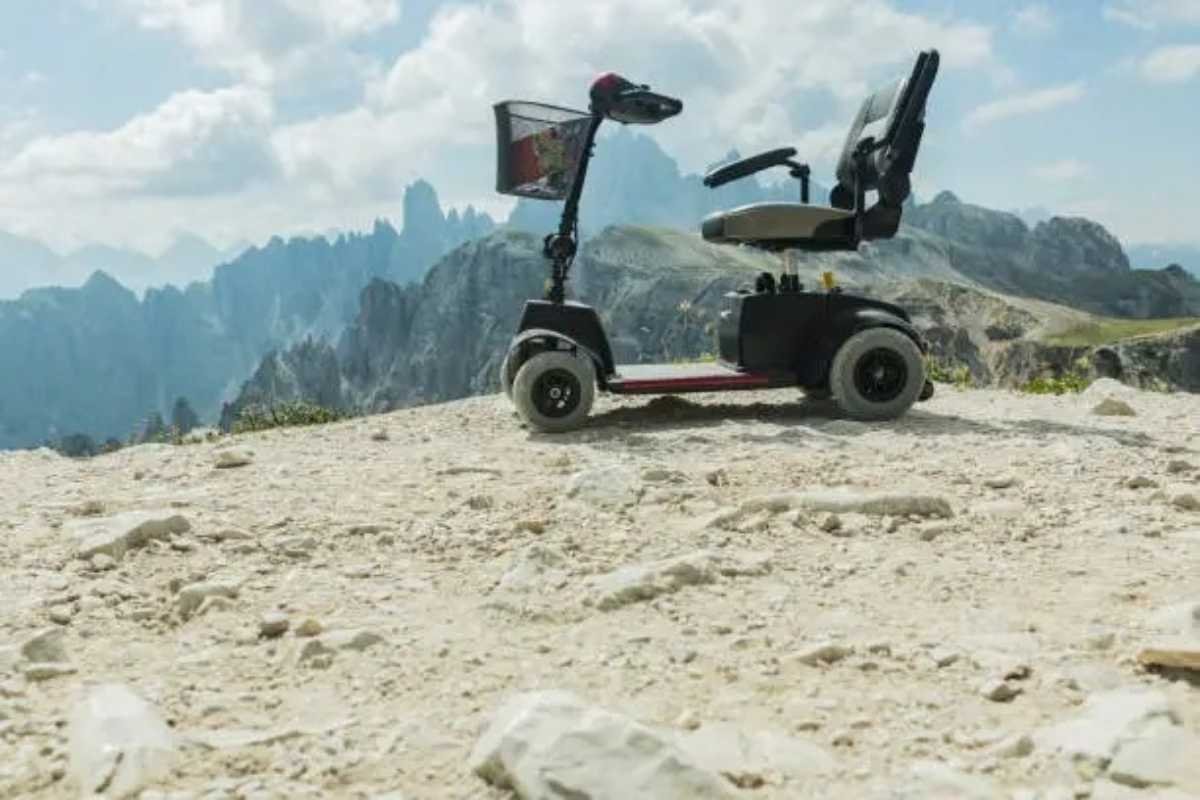
All-terrain scooters are the heavy-duty option, built with full suspension, oversized tires, and powerful motors specifically to maximize mobility scooter terrain capability across mud, sand, gravel, and steep or uneven ground.
Knowing which category fits your lifestyle before you shop will save you from buying a scooter that looks great but can’t handle your actual environment.
Comparing Brands by Terrain Capability
Different brands take different approaches to mobility scooter terrain capability, and some models are specifically engineered for rougher ground than others.
| Brand | Terrain Focus | Wheel/Tire Type | Notable Model |
|---|---|---|---|
| Pride Mobility | Outdoor and mixed terrain | Pneumatic tires, mid-size wheels | Pride Baja Wrangler 2 |
| Golden Technologies | Light outdoor and indoor | Foam-filled tires | Golden Companion II |
| Drive Medical | General outdoor use | Semi-pneumatic tires | Drive Medical Scout LX |
| EV Rider | Long-range outdoor terrain | Pneumatic tires, larger wheels | EV Rider Transport AF+ |
| Shoprider | Heavy-duty mixed terrain | Reinforced pneumatic tires | Shoprider Enduro XL3 |
| AFIKIM | All-terrain and off-road | Full suspension, oversized tires | AFIKIM Afiscooter S3 |
If your daily routine includes gravel driveways, grassy parks, or uneven neighborhood sidewalks, models with stronger mobility scooter terrain capability, like the AFIKIM Afiscooter S3 or Shoprider Enduro XL3, are worth prioritizing over lighter indoor-focused units.
How to Test Terrain Capability Before Buying
The only reliable way to judge mobility scooter terrain capability is to try the scooter on surfaces similar to what you’ll use at home. Ask the dealer if you can take the scooter outside to a curb, a grassy patch, or a gravel section of the parking lot. Pay attention to how the scooter handles small bumps, whether it feels stable when angled on a slope, and whether the motor struggles at all when crossing soft ground. A scooter that feels fine on flat tile inside a showroom can behave very differently once real-world mobility scooter terrain capability is put to the test.
Pros and Cons of High Terrain Capability Scooters
Pros:
- Handles gravel, grass, and uneven sidewalks with far less risk of getting stuck.
- Reduces jarring and discomfort thanks to better suspension and larger tires.
- More versatile, since one scooter can cover both indoor and outdoor needs.
- Better stability on slopes and inclines, lowering the risk of tipping.
- Longer-lasting tires when paired with pneumatic or reinforced options.
Cons:
- Scooters built for strong terrain capability tend to be heavier and larger overall.
- Higher price point compared to basic indoor-only models.
- Larger turning radius, which can be less convenient indoors.
- May require more maintenance, especially with air-filled tires.
Common Mistakes When Evaluating Terrain Capability
A common mistake is judging mobility scooter terrain capability purely from marketing photos showing a scooter on a dirt trail. Always check the actual wheel size, tire type, ground clearance measurements, and motor wattage listed in the specifications, since these numbers tell you far more than a promotional image. Another mistake is assuming that a scooter labeled “all-terrain” will handle every surface equally well. Even strong all-terrain models have limits, such as maximum incline angle or minimum surface firmness, so it helps to read the manufacturer’s stated limits rather than assuming unlimited capability.
Weather and Seasonal Impact on Terrain Capability
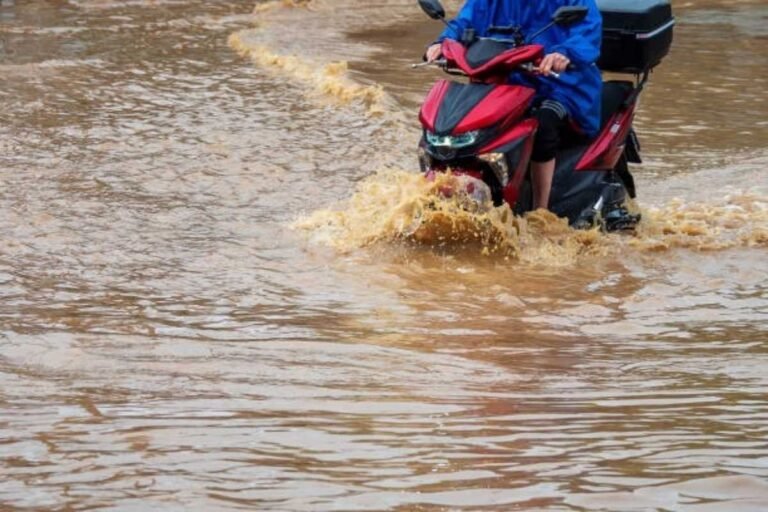
It’s also worth remembering that mobility scooter terrain capability isn’t fixed all year round. Wet grass, mud after rain, or icy patches in winter can turn even a moderately rough surface into a serious challenge for a scooter that otherwise handles dry ground well. If you live somewhere with distinct seasons, factor in how mobility scooter terrain capability holds up when conditions change, not just how the scooter performs on a dry, sunny test day. Scooters with deeper tire tread and stronger torque tend to retain more of their mobility scooter terrain capability in wet or slippery conditions, while lighter indoor-style models can lose traction quickly outside of ideal weather.
Matching Terrain Capability to Your Daily Route
Before buying, it helps to actually map out your typical week. Where do you go most often, and what does the ground look like along the way? If your route includes a park path, a gravel shortcut, or a curb without a ramp, write those details down and bring them up with the dealer. This turns mobility scooter terrain capability from an abstract spec into a practical checklist tied to your real life, which makes it far easier to choose confidently between an outdoor model and a full all-terrain option.
Frequently Asked Questions
What terrain can a standard mobility scooter handle? Most standard scooters are built for smooth pavement and light inclines. If you need to cross grass, gravel, or rougher ground regularly, you’ll want a model with stronger mobility scooter terrain capability, such as an outdoor or all-terrain category scooter.
Do bigger wheels always mean better terrain capability? Larger wheels generally improve mobility scooter terrain capability, but wheel size works together with suspension, tire type, and motor power. A scooter with big wheels but no suspension may still ride roughly on bumpy ground.
Can I upgrade tires to improve terrain capability? Some models allow tire upgrades, such as switching from foam to pneumatic tires, which can improve mobility scooter terrain capability on rough or uneven surfaces. Check with the manufacturer or dealer before assuming compatibility.
Is terrain capability the same as speed? No. Speed and mobility scooter terrain capability are related but separate specs. A scooter can be fast on flat pavement but still struggle on grass or gravel if it lacks the right wheels, tires, and suspension.
How do I know if a scooter is rated for outdoor terrain? Manufacturer spec sheets usually list an intended use category, such as indoor, outdoor, or all-terrain. This rating is a quick way to gauge mobility scooter terrain capability before you even see the scooter in person.
Final Thoughts
Choosing a scooter without considering mobility scooter terrain capability is one of the easiest ways to end up disappointed after purchase, and it’s a mistake that a short conversation with a knowledgeable dealer about mobility scooter terrain capability can easily prevent. Think carefully about the surfaces you cross every day, from your driveway to the sidewalks in your neighborhood, and match that reality to the wheel size, suspension, tire type, and motor power of the scooter you’re considering.
Whether you need a lightweight indoor model or a rugged all-terrain option like the AFIKIM Afiscooter S3, matching mobility scooter terrain capability to your actual lifestyle will save you money, frustration, and the risk of getting stuck on ground your scooter simply wasn’t built to handle.