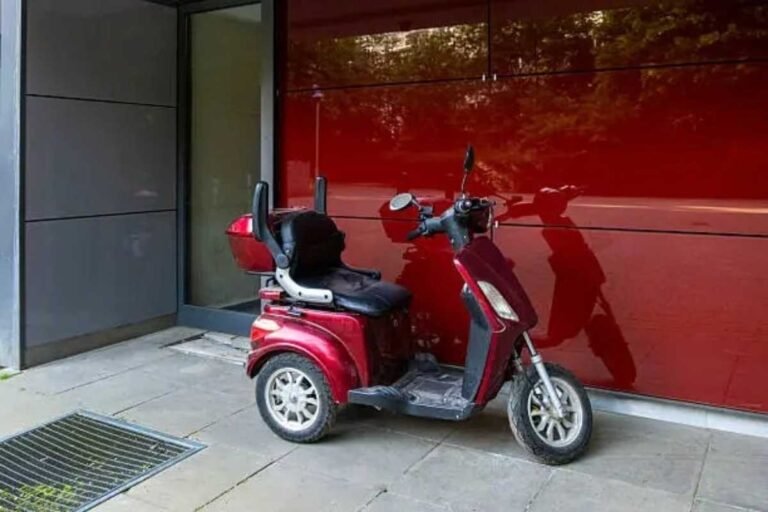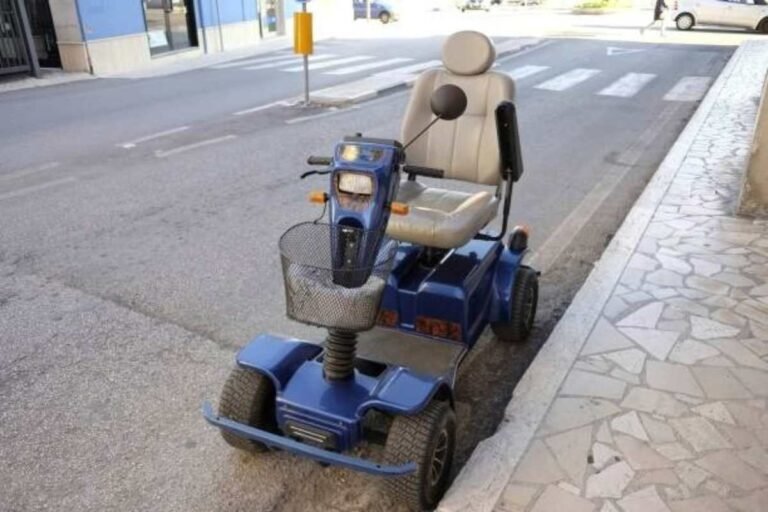
Living with the use of only one hand does not mean giving up your independence. Whether you are recovering from a stroke, managing arthritis, or adapting after an injury, the right one handed mobility scooter can help you get to the shops, the park, or a friend’s house without needing help. The trick is knowing which controls, seats, and frames actually work for single-hand use.
In this guide, we explain what makes a one handed mobility scooter different from a standard model, which features matter most, and which scooters from Pride Mobility, Golden Technologies, Drive Medical, and Shoprider are worth a closer look. We also added a comparison table, honest pros and cons, and answers to the questions buyers ask most.
What Is a One Handed Mobility Scooter?
A one handed mobility scooter is not a special category with its own legal definition. It is simply a scooter whose steering, throttle, braking, and seat adjustments can be handled comfortably with a single hand. Most modern three-wheel and four-wheel scooters already come close, because the tiller (the steering column) carries a thumb-operated or lever-style throttle that does not require two hands to hold.
What separates a great one handed mobility scooter from an average one is how many tasks you can complete without switching hands. Can you reach the key, the speed dial, the horn, and the light switch from one side? Can you fold the armrest, swivel the seat, and disconnect the battery with a single hand? The more “yes” answers, the better the scooter fits you.
Who Benefits From a One Handed Mobility Scooter?
Many people search for a one handed mobility scooter after a life change. Common situations include:
- Stroke survivors with weakness on one side (hemiplegia), who often want a mobility scooter for stroke patients that supports the body evenly.
- People with arthritis in one wrist or hand, who need a light touch instead of a strong grip.
- Amputees or people with limited arm mobility after an injury.
- Anyone recovering from surgery on a shoulder, elbow, or wrist.
If you belong to one of these groups, a one handed mobility scooter can reduce fatigue and keep you moving safely. Always talk to your doctor or occupational therapist before you buy, as they can advise on the best control side and seating position for your body.
Key Features to Look for in a One Handed Mobility Scooter
Not every scooter is friendly to single-hand use. Use this checklist when you compare models.
1. Thumb Throttle or Lever Control
A thumb throttle is the heart of any good one handed mobility scooter. Instead of twisting a grip, you push a paddle with your thumb or finger to go and release it to slow down. Look for a control that sits naturally under your stronger hand. Some models use a dual-paddle “delta tiller” that lets you push with either hand, which makes it easy to switch sides.
2. A Responsive Tiller
Steering should feel light. A tiller that needs strong force to turn will tire your arm quickly. Test the tiller angle adjustment too, since a tilt-adjustable column lets you set the handle at a height that suits your posture.
3. Flip-Up Armrests
A one handed mobility scooter should let you get on and off easily. Flip-up armrests remove the barrier when you transfer from a chair or car. Choose padded arms so your resting arm stays supported during longer rides.
4. Swivel Seat With One-Hand Lever
A swivel seat rotates so you can face the scooter before sitting. The best seats have a lever you can pull with one hand and a seat back that is high enough to support a weaker side.
5. Stable Base and Anti-Tip Wheels
If one arm cannot brace you, balance matters more. Four-wheel scooters generally offer better stability, while three-wheel scooters offer tighter turning. Anti-tip wheels add a safety margin.
6. Easy Battery and Charging Access
Choose a one handed mobility scooter with a charging port you can reach without bending or twisting. Some models let you charge the battery while it stays on the scooter, which is a big help if you cannot lift heavy parts.
Comparison Table: Best One Handed Mobility Scooter Options
The table below compares five well-known models. Specifications are approximate and can change by year and configuration, so always confirm details on the manufacturer’s page before buying.
| Model | Wheels | Approx. Weight Capacity | Approx. Range | One-Hand Friendly Features | Best For |
|---|---|---|---|---|---|
| Pride Mobility Go-Go Elite Traveller | 3 or 4 | 300 lb | Up to about 15 miles | Delta tiller, easy disassembly | Travel and light daily use |
| Golden Technologies Buzzaround LX | 3 or 4 | 300 lb | Up to about 15 miles | Lightweight frame, simple controls | Compact indoor and outdoor use |
| Drive Medical Scout | 3 or 4 | 300 lb | Up to about 15 miles | Padded flip-up arms, swivel seat | Comfort and easy transfers |
| Pride Mobility Victory 10 LX | 3 or 4 | 350 lb | Up to about 18 miles | Cushioned seat, wide stance | Stability for daily rides |
| Shoprider Sprinter | 3 or 4 | 300 lb | Up to about 15 miles | Responsive tiller, clear controls | Budget-friendly reliability |
The 5 Best One Handed Mobility Scooter Picks Reviewed
1. Pride Mobility Go-Go Elite Traveller: Best for Travel
The Go-Go Elite Traveller is a favorite for people who want a portable one handed mobility scooter. Its delta tiller can be pushed with either hand, so you are not locked into using your weaker side. It breaks down into a few lighter pieces for the car trunk, though you should check whether you can handle the pieces one-handed or need help.
Pros: Portable, easy to steer, widely available. Cons: Ride can feel firm on rough pavement.
2. Golden Technologies Buzzaround LX: Best Lightweight Option
The Buzzaround LX suits shoppers who want a simple, compact one handed mobility scooter for malls, grocery stores, and short outdoor trips. Controls are straightforward, which reduces the learning curve for someone new to scooters after a stroke or injury.
Pros: Lightweight, simple layout, good maneuverability. Cons: Smaller battery means shorter range on hills.
3. Drive Medical Scout: Best for Comfort and Transfers
The Scout focuses on comfort, with padded flip-up armrests and a swivel seat that make getting on and off easier. For riders recovering from surgery or with limited strength, easier transfers can be just as important as the throttle itself.
Pros: Comfortable seat, easy access, stable ride. Cons: Heavier than travel-focused models.
4. Pride Mobility Victory 10 LX: Best for Stability
The Victory 10 LX has a wider stance and a higher weight capacity, which gives a confident feel on uneven ground. If balance is a concern because one side of your body is weaker, this one handed mobility scooter offers extra reassurance.
Pros: Stable, higher capacity, comfortable seat. Cons: Larger footprint, harder to store in small spaces.
5. Shoprider Sprinter: Best Budget Pick
The Shoprider Sprinter is a practical choice if you want dependable performance without paying premium prices. Its clear controls and responsive tiller make it a reasonable starter one handed mobility scooter for everyday errands.
Pros: Affordable, dependable, easy to learn. Cons: Fewer comfort upgrades than higher-priced models.
Pros and Cons of Choosing a One Handed Mobility Scooter
Pros
- Restores independence for daily errands and social visits.
- Reduces strain on a weak, painful, or injured hand.
- Many models are compact and light enough for the car.
- Adjustable tillers and seats let you fine-tune the fit.
Cons
- Some models require two hands to disassemble or transport.
- Cheaper scooters may have stiffer controls.
- Fitting matters, so buying without a test ride can be risky.
How to Choose the Right One Handed Mobility Scooter
Start with your strongest hand. If your right hand is stronger, check that the throttle and key are easy to reach on that side. Next, think about where you will ride most often. For indoor use and tight aisles, a three-wheel model turns more sharply. For outdoor sidewalks and uneven ground, a four-wheel model gives better stability.
Then look at weight capacity, battery range, and transport. If you plan to lift the scooter into a car, confirm that you can handle it or that someone can help. If not, consider a ramp or a vehicle lift. Finally, ask about warranty and local service, because a one handed mobility scooter you cannot get repaired quickly is not much help.
Simple Add-Ons That Make a One Handed Mobility Scooter Easier to Use
A few inexpensive accessories can make a big difference:
- Steering knobs or grip aids that help a weak hand hold the tiller.
- Cup holders and baskets placed on your usable side.
- Seat cushions that support balance and reduce pressure.
- Cane or crutch holders so you never have to carry them.
- Mirror and lights for safe riding at dusk.
Occupational therapists can recommend other adaptations if your hand strength or range of motion is limited.
Safety Tips for Single-Hand Riders
Riding with one hand is safe when you take a few precautions. Practice in a quiet area first, and start at a low speed setting. Keep your speed down on slopes and turns. Never carry heavy bags on the tiller, since they can affect steering. Charge the battery fully before longer trips, and check the tires regularly.
If you have limited feeling or strength in one arm, keep that arm supported on the armrest while riding so it does not slip.
Frequently Asked Questions
Can I really ride a scooter with only one hand?
Yes. Most mobility scooters can be steered and controlled with one hand, especially models with a thumb throttle. A one handed mobility scooter simply focuses on making that easier and more comfortable.
Do I need a doctor’s prescription?
Requirements vary by country and insurance provider. Some insurance plans or programs may require a prescription, so check with your provider and your doctor before you buy.
Is a three-wheel or four-wheel model better?
Three-wheel scooters turn more tightly and suit indoor use. Four-wheel scooters feel more stable outdoors. For a one handed mobility scooter, pick the one that matches where you ride most.
Can I switch the throttle to the other side?
On many scooters with a delta tiller, yes, because both sides of the paddle work the throttle. Always confirm this feature before you buy.
What is the best One Handed Mobility Scooter overall?
The best choice depends on your needs. The Pride Mobility Go-Go Elite Traveller suits travelers, the Drive Medical Scout suits comfort seekers, and the Pride Mobility Victory 10 LX suits riders who need extra stability.
Final Thoughts
Choosing a one handed mobility scooter is about matching the machine to your body, your home, and your daily routine. Focus on a comfortable thumb throttle, a light tiller, easy seat and armrest adjustments, and a stable base. Test ride if you can, talk to your care team, and pick the model that lets you move with confidence.
With the right one handed mobility scooter, one working hand is all you need to get back to the places and people you enjoy.