Choosing between a mobility scooter and a power wheelchair is one of the biggest decisions a person with limited mobility will make. Both devices restore independence, but they are built for very different lifestyles, environments, and physical needs. If you have been searching “mobility scooter vs power wheelchair” trying to figure out which one actually fits your daily life, this guide breaks down every real difference — from turning radius to insurance coverage — so you can make a confident, informed choice.
The short answer to the mobility scooter vs power wheelchair debate is this: mobility scooters are best for people with reasonably good upper body strength and balance who want to travel longer distances outdoors, while power wheelchairs are better suited for people with limited trunk control, weaker arms, or more severe mobility limitations who need indoor maneuverability and postural support. But there is a lot more nuance than that single sentence, so let’s dig into the details.
Before we go further, it helps to understand why so many people get stuck on the mobility scooter vs power wheelchair question in the first place. Both devices look similar from a distance — four wheels, a seat, a battery, a control system — but the way they’re engineered, controlled, and prescribed is completely different. Getting this decision wrong can mean an uncomfortable ride, wasted money, or worse, a device that doesn’t actually support your medical condition. That’s exactly why we’re breaking the mobility scooter vs power wheelchair comparison down piece by piece below.
What Is a Mobility Scooter?
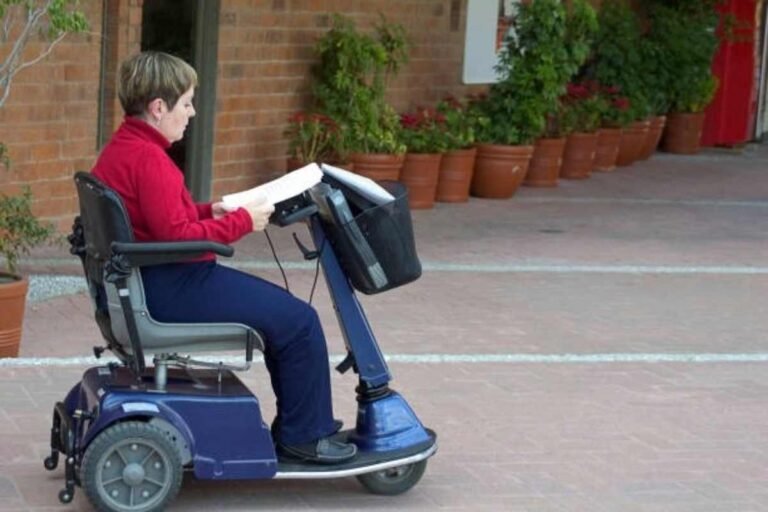
A mobility scooter is a battery-powered, three- or four-wheeled device steered with a tiller (handlebar-style control), similar to a bicycle or motorcycle grip. Riders sit in a captain’s chair and use a throttle to control speed. Scooters are designed primarily for people who can still walk short distances, transfer independently, and maintain upper body balance while seated.
Popular models like the Pride Mobility Victory 10.2, Golden Technologies Buzzaround EX, and EV Rider Transport AF+ fall into this category, offering travel ranges between 10 and 30 miles per charge depending on battery size and terrain.
What Is a Power Wheelchair?
A power wheelchair is an electric wheelchair controlled by a joystick, sip-and-puff device, or head array, depending on the user’s physical capabilities. Unlike a scooter, a power wheelchair offers a tighter turning radius, programmable seating (tilt, recline, elevating leg rests), and far greater customization for postural support.
Brands like Permobil, Pride Jazzy, Invacare TDX, and Drive Medical Titan dominate this category, with models built for anything from mild mobility loss to complete paralysis requiring full trunk and head support.
Understanding these two definitions is the first real step in the mobility scooter vs power wheelchair comparison, because everything else — cost, insurance, seating, and maneuverability — flows directly from how each device is designed to be controlled and who it’s designed to serve.
Mobility Scooter vs Power Wheelchair: Side-by-Side Comparison
| Feature | Mobility Scooter | Power Wheelchair |
|---|---|---|
| Control method | Tiller/handlebar steering | Joystick or alternative input |
| Best for | Moderate mobility limitations | Severe mobility limitations |
| Turning radius | Wider, less maneuverable indoors | Tight, excellent indoor maneuverability |
| Seating customization | Limited (fixed captain’s seat) | Highly customizable (tilt, recline, headrests) |
| Upper body strength needed | Moderate to good | Minimal |
| Typical top speed | 4–8 mph | 4–6 mph |
| Average price range | $800–$3,500 | $1,500–$25,000+ |
| Portability | Often foldable or disassembles | Usually bulkier, less portable |
| Insurance/Medicare coverage | Sometimes covered | More commonly covered for qualifying diagnoses |
This table alone answers most of the mobility scooter vs power wheelchair question for casual buyers, but your specific diagnosis, home layout, and budget will ultimately decide which device is right.
Key Differences That Actually Matter
1. Physical Ability and Diagnosis
The biggest factor in the mobility scooter vs power wheelchair decision is your current physical ability. Scooters require you to sit upright unsupported, grip a tiller, and transfer in and out of the seat independently. Power wheelchairs are engineered for users with conditions like ALS, muscular dystrophy, severe arthritis, or spinal cord injuries who need full postural support and can’t safely operate a tiller. This single factor resolves the mobility scooter vs power wheelchair question for most buyers before they even look at price.
2. Indoor vs Outdoor Use
Power wheelchairs generally win indoors. Their tight turning radius makes them far easier to navigate through narrow hallways, bathrooms, and around furniture. Mobility scooters, by contrast, shine outdoors — on sidewalks, at parks, in shopping malls, and on longer errands where extended battery range and a comfortable captain’s seat matter more than tight turning. Anyone comparing mobility scooter vs power wheelchair options purely for home use should lean toward the wheelchair; anyone focused on outdoor freedom should lean toward the scooter.
3. Seating and Postural Support
If you need pressure-relief cushions, power tilt, recline, or elevating leg rests to manage circulation, pressure sores, or fatigue, a power wheelchair will almost always outperform a scooter, which typically offers a fixed captain’s chair with limited adjustability. This is one of the clearest medical distinctions in the mobility scooter vs power wheelchair conversation, and it’s often the deciding factor for occupational therapists writing prescriptions.
4. Cost and Insurance Coverage
Power wheelchairs, especially complex rehab models, tend to be more expensive but are also more frequently covered by Medicare or private insurance because they’re prescribed for documented medical necessity. Basic mobility scooters are sometimes cheaper out-of-pocket but face stricter coverage requirements since Medicare classifies them differently under durable medical equipment rules. Before buying either device, it’s worth calling your insurance provider directly and asking how they classify mobility scooter vs power wheelchair claims under your specific plan.
5. Portability and Storage
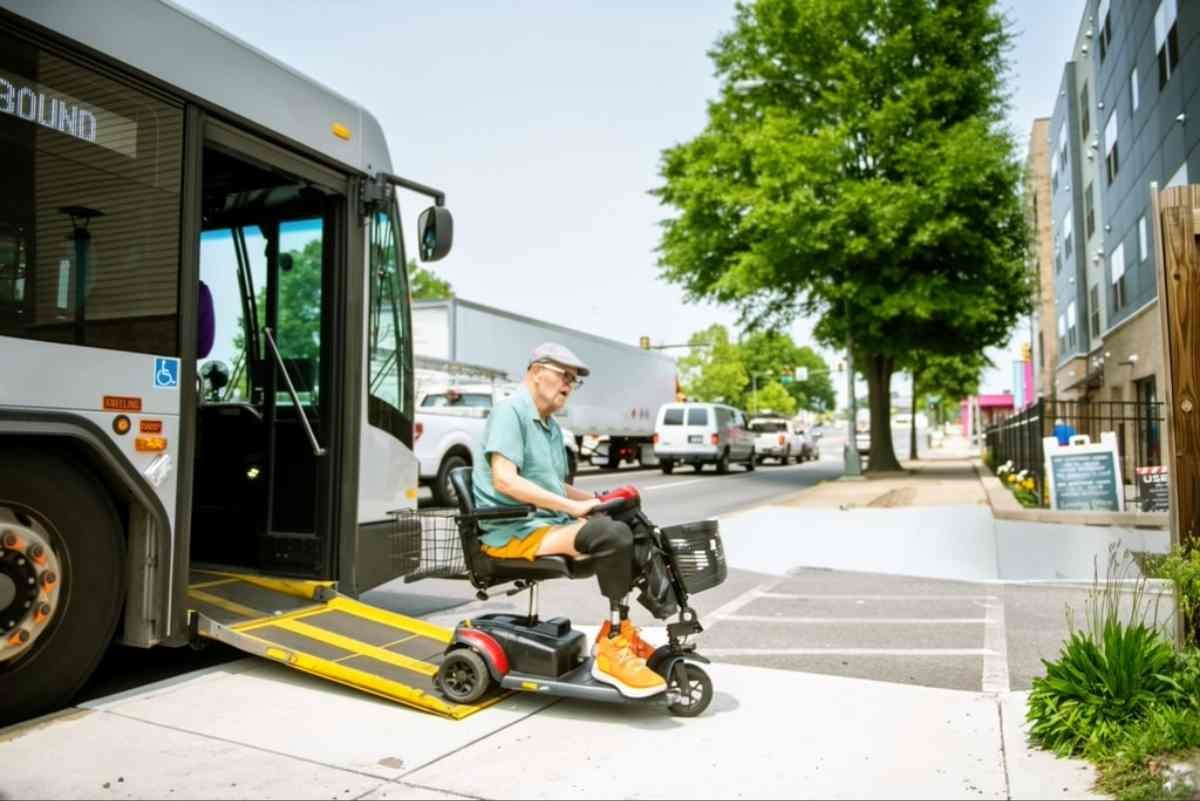
Many mobility scooters, like 3-wheel travel models, disassemble into lightweight pieces for car trunk storage or airline travel. Power wheelchairs are usually heavier and bulkier, often requiring a wheelchair-accessible vehicle or ramp for transport. If portability is your top priority, this alone can settle the mobility scooter vs power wheelchair debate in favor of a lightweight travel scooter.
Weighing the pros and cons side by side is often the fastest way to settle a mobility scooter vs power wheelchair debate, so here’s a direct breakdown of both.
Pros and Cons of Mobility Scooters
Pros:
- Longer battery range for outdoor errands and travel
- Comfortable captain’s seating for extended sitting
- Often more affordable upfront
- Many models fold or disassemble for transport
Cons:
- Requires decent upper body strength and balance
- Wider turning radius makes indoor use harder
- Limited seating customization
- Not ideal for users needing postural support
Pros and Cons of Power Wheelchairs
Pros:
- Excellent indoor maneuverability
- Highly customizable seating and controls
- Suitable for users with severe physical limitations
- Better long-term support for progressive conditions
Cons:
- Higher price point, especially for complex rehab models
- Heavier and harder to transport
- Shorter typical range than many scooters
- May require a wheelchair-accessible vehicle
Real-World Scenarios: Mobility Scooter vs Power Wheelchair
It sometimes helps to think through real situations rather than specs alone.
- A retiree who still gardens, drives, and runs errands but tires easily on long walks — this is a textbook mobility scooter vs power wheelchair case that almost always favors the scooter, thanks to its comfortable seating and long outdoor range.
- A person with advanced multiple sclerosis who has limited trunk control and needs pressure-relief seating — here, the mobility scooter vs power wheelchair answer clearly favors the power wheelchair, since postural support is the priority.
- A wheelchair user living in a small apartment with narrow hallways — indoor maneuverability makes the power wheelchair the practical winner in this mobility scooter vs power wheelchair scenario, regardless of outdoor range.
- A traveler who wants a lightweight device for flights and road trips — portability tips this mobility scooter vs power wheelchair choice toward a foldable travel scooter.
Sizing and Fit Guide
Getting the right fit matters just as much as the mobility scooter vs power wheelchair decision itself. Consider these measurements before buying:
- Seat width: Measure hip width and add 1–2 inches for clearance.
- Weight capacity: Always choose a model rated at least 20–30 lbs above your body weight for safety margin and long-term durability.
- Doorway width: Measure your narrowest interior doorway; most standard doorways are 28–32 inches, and many power wheelchairs are built to fit through them.
- Ground clearance: If you’ll be navigating uneven sidewalks, curbs, or gravel, prioritize models with higher ground clearance and larger wheels.
- Turning radius: For apartments or smaller homes, look for power wheelchairs with a turning radius under 20 inches.
Which One Should You Choose?
If you’re still undecided in the mobility scooter vs power wheelchair debate, ask yourself these questions:
- Can I safely transfer in and out of a seat without full support?
- Do I need the device mostly for outdoor errands, or mostly indoors?
- Do I require special seating like tilt, recline, or head support?
- What does my insurance or Medicare plan actually cover?
- Do I need something portable for travel and car trips?
These five questions are the fastest shortcut through the entire mobility scooter vs power wheelchair decision. If most of your answers point to independence, outdoor range, and affordability, a scooter is likely the better fit. If they point to postural support, indoor navigation, and a progressive medical condition, a power wheelchair is the safer long-term investment.
Top Brand Recommendations
No mobility scooter vs power wheelchair guide is complete without naming actual models worth considering. For mobility scooters, the Pride Mobility Victory 10.2, Golden Technologies Buzzaround EX, and Shoprider Enterprise Deluxe are consistently rated among the best for reliability and comfort. For power wheelchairs, the Pride Jazzy Air 2, Permobil M3 Corpus, and Drive Medical Titan AXS stand out for their build quality, seating customization, and insurance-friendly documentation support.
Frequently Asked Questions
Is a power wheelchair better than a mobility scooter? Neither is universally “better” in the mobility scooter vs power wheelchair comparison — it depends entirely on your physical needs. Power wheelchairs offer more postural support and indoor maneuverability, while mobility scooters offer better outdoor range and comfort for users with more physical capability.
Does Medicare cover mobility scooters or power wheelchairs? Both can be covered under Medicare Part B as durable medical equipment, but you’ll need a documented face-to-face mobility evaluation and prescription. Power wheelchairs are often approved more readily for users with documented severe mobility limitations.
Can I use a mobility scooter indoors? Yes, but their wider turning radius makes them harder to maneuver in tight spaces compared to a power wheelchair, which is specifically engineered for indoor navigation.
How long do mobility scooter and power wheelchair batteries last? Most batteries last 1–3 years with regular use before needing replacement, though range per charge depends heavily on terrain, rider weight, and battery capacity.
What’s the average lifespan of each device? With proper maintenance, both mobility scooters and power wheelchairs typically last 3–5 years, though higher-end power wheelchairs built for daily heavy use can last longer with part replacements.
Is it hard to switch between a mobility scooter and a power wheelchair later? Not necessarily. Many users start with a scooter and transition to a power wheelchair as their condition progresses, or vice versa after rehab and improved strength. Revisiting the mobility scooter vs power wheelchair decision periodically with your doctor or therapist is completely normal as your needs change.
Which one is easier for a beginner to learn? Most new users find mobility scooters slightly easier to learn at first because the tiller steering feels intuitive, similar to a bicycle. However, power wheelchair joysticks are just as easy to master with a short practice period, and many users adapt within days.
Final Thoughts
There’s no single winner in the mobility scooter vs power wheelchair debate — only the right device for your specific body and lifestyle. The mobility scooter vs power wheelchair decision ultimately comes down to your physical ability, living environment, and medical needs. Take time to test-drive both options if possible, consult with a physical or occupational therapist, and check your insurance coverage before committing. Whichever device you choose, the goal is the same — restoring independence and confidence in your daily movement.