If getting around has started feeling harder than it used to, you’ve probably found yourself comparing a mobility scooter vs walker and wondering which one actually makes daily life easier. Both are common mobility aids, but they solve very different problems, and picking the wrong one can mean either overspending on features you don’t need or ending up with support that doesn’t match your actual mobility level. This mobility scooter vs walker comparison breaks down what each option really offers, so you can choose with confidence instead of guessing.
Mobility needs vary enormously from person to person. Someone recovering from a minor injury has very different requirements than someone managing a long-term condition that limits walking distance. Before you spend money on either option, let’s look at exactly what a mobility scooter vs walker decision should be based on.
Why the Mobility Scooter vs Walker Decision Matters
Choosing between a mobility scooter vs walker isn’t just about price — it directly affects independence, safety, and how much of your daily routine you can manage on your own. A walker that’s inadequate for your needs can lead to falls or exhaustion. A scooter that’s more than you need can be an unnecessary expense and, in some cases, actually reduce helpful physical activity.
People weighing a mobility scooter vs walker usually fall into a few groups: those with limited walking stamina but decent balance, those needing more substantial support due to weakness or instability, and those covering longer distances outdoors who need speed and range a walker simply can’t provide. Each group benefits from a different answer.
What a Walker Actually Does
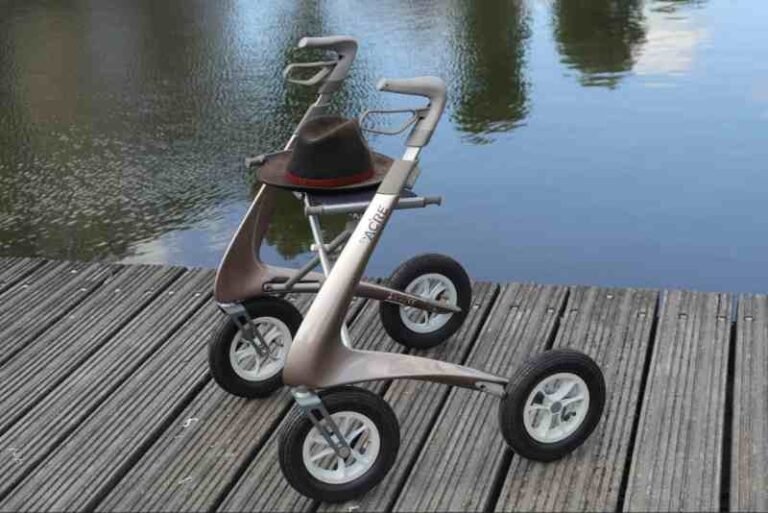
One side of the mobility scooter vs walker comparison is manual support. A walker is a manual mobility aid that provides direct physical support while you walk under your own power. It requires upper body strength and some ability to bear weight and balance, but it offers stability with every step you take.
What walkers are genuinely good for:
- Providing stability for people with balance concerns but decent walking ability
- Encouraging continued physical activity and muscle strength
- Lightweight and easy to fold for transport or storage
- Affordable compared to powered mobility options
Standard and rollator-style walkers from brands like Drive Medical are widely used for indoor mobility and short outdoor trips. Rollators, which include wheels and often a seat, offer more mobility than traditional four-legged walkers while still requiring the user to walk under their own power.
What walkers don’t do:
- Help with longer distances or extended outdoor mobility
- Provide support for users who can’t safely bear weight while walking
- Offer speed for covering ground quickly, such as at a mall, airport, or large outdoor event
- Reduce physical fatigue for people with limited stamina or endurance conditions
This is the core limitation people run into with walkers in the mobility scooter vs walker comparison: a walker still requires meaningful physical effort, which isn’t always realistic for people managing fatigue-based conditions or significant mobility loss.
What a Mobility Scooter Actually Does
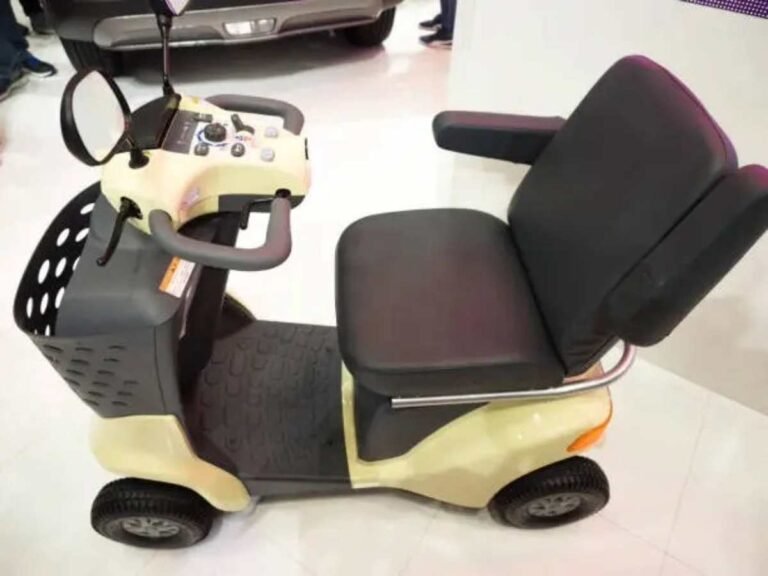
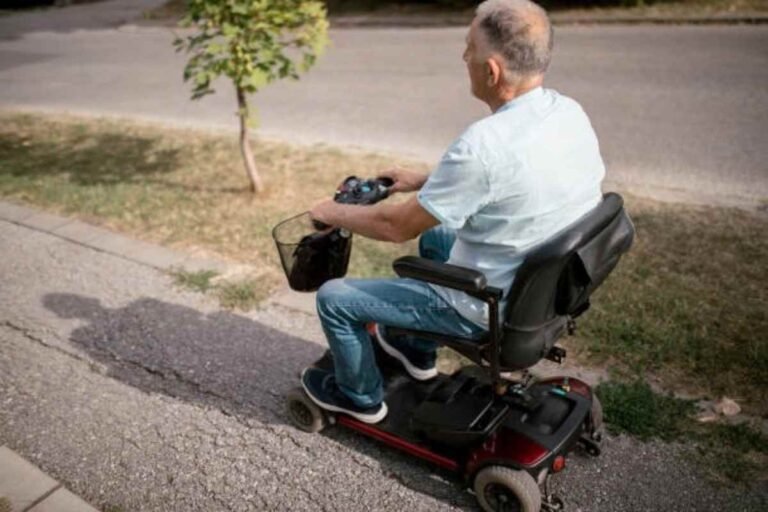
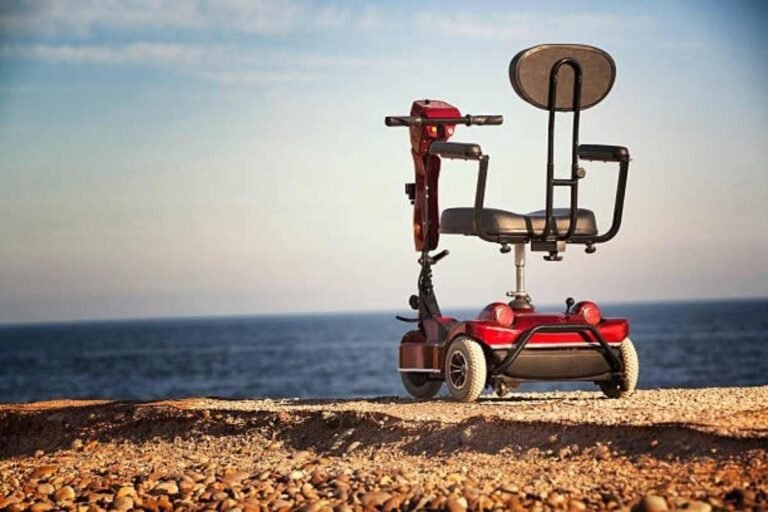
The other side of the mobility scooter vs walker comparison is powered mobility. A mobility scooter is a powered device that lets the user sit and travel without walking, controlled through a simple throttle and steering system. It removes the physical demand of walking almost entirely, making it a very different category of mobility aid than a walker.
What mobility scooters are genuinely good for:
- Covering longer distances without physical exertion
- Supporting users with limited stamina, chronic fatigue, or significant mobility restrictions
- Providing independence for outdoor errands, shopping trips, and social outings
- Offering storage baskets and higher weight capacities on many models
Brands like Pride Mobility, Golden Technologies, and Drive Medical make scooters ranging from compact travel models to heavy-duty options built for outdoor terrain. EV Rider and Shoprider also offer well-reviewed mid-range choices with solid battery range for everyday errands.
What mobility scooters don’t do:
- Provide the physical activity benefits that walking with a walker offers
- Fit as easily into small spaces or narrow doorways in some larger models
- Cost as little as a basic walker — even entry-level scooters typically start higher
- Work well for users who need close, hands-on stability rather than seated mobility
This is the flip side of the mobility scooter vs walker equation: a scooter solves distance and fatigue problems but doesn’t provide the same kind of physical engagement or the low cost of a basic walker.
Mobility Scooter vs Walker: Side-by-Side Comparison
Here’s the mobility scooter vs walker comparison laid out at a glance.
| Factor | Walker (e.g. Drive Medical Rollator) | Mobility Scooter (e.g. Pride Mobility) |
|---|---|---|
| Physical Effort Required | Moderate, user walks independently | Minimal, user sits and drives |
| Best For | Balance support, short distances | Long distances, limited stamina |
| Cost | $50–$200 | $600–$3,000+ |
| Portability | Lightweight, folds easily | Heavier, some models disassemble |
| Indoor Use | Excellent | Can be bulky in tight spaces |
| Outdoor Range | Limited by user’s stamina | Several miles per charge on many models |
| Physical Activity Benefit | Encourages continued movement | Minimal physical exertion |
Looking at this table, the mobility scooter vs walker comparison comes down to how much physical support you need versus how much distance and independence you’re trying to gain without physical exertion.
Pros and Cons: Walkers
Pros:
- Affordable and widely available
- Lightweight and easy to transport
- Encourages continued physical activity and strength maintenance
- No batteries, charging, or maintenance required
Cons:
- Requires meaningful upper body strength and balance
- Limited for long-distance or extended outdoor use
- Doesn’t help with fatigue-based mobility limitations
- Slower pace than powered alternatives
That pace difference is often the deciding factor once fatigue, not just balance, enters the mobility scooter vs walker equation.
Pros and Cons: Mobility Scooters
Pros:
- Dramatically expands range and independence outdoors
- Ideal for users with limited stamina or significant mobility restrictions
- Comfortable seated transport with storage options on many models
- Higher weight capacities on many heavy-duty models
Cons:
- Higher upfront cost than a basic walker
- Requires charging and occasional maintenance
- Bulkier for transport and storage, especially larger models
- Reduces physical activity compared to walking with a walker
That reduced activity is worth weighing seriously in the mobility scooter vs walker decision, especially for users who still benefit from movement.
How to Decide: Mobility Scooter vs Walker
Work through these questions to settle the mobility scooter vs walker decision for your specific situation:
- Can you walk short distances safely with support? If balance is your main concern rather than stamina, a rollator-style walker likely provides enough support without unnecessary cost.
- Do you struggle with fatigue over longer distances? This is where a mobility scooter vs walker decision usually tips toward the scooter — walking-based aids won’t solve a stamina problem.
- Do you need to cover ground outdoors, like at stores, parks, or events? A mobility scooter from Pride Mobility or Golden Technologies offers far more practical range than any walker.
- Is maintaining physical activity part of your recovery or health plan? A walker keeps you moving under your own power, which some users and physical therapists prioritize even if a scooter would be more convenient.
For many people, the mobility scooter vs walker answer isn’t permanent — some start with a walker and transition to a scooter as mobility needs change, or use both depending on the situation.
Common Mistakes in the Mobility Scooter vs Walker Decision
Getting the mobility scooter vs walker call wrong usually comes down to a few recurring mistakes:
- Buying a scooter before trying a walker for milder mobility needs. Some people overspend on a scooter when a simple rollator would have met their actual needs.
- Sticking with a walker despite significant fatigue-based limitations. Pushing through exhaustion with a walker when a scooter would restore real independence isn’t a better outcome — it often leads to reduced activity overall.
- Ignoring weight capacity specifications. Both walkers and scooters have weight limits, and choosing a model without checking this can compromise safety.
- Not considering storage and transport needs. A mobility scooter that doesn’t fit in your vehicle or through your doorways creates a completely different daily problem than the one it solved.
Avoiding these mistakes often matters more to daily quality of life than which side of the mobility scooter vs walker debate someone initially leans toward.
Cost and Time Considerations
Cost is often the biggest factor in the mobility scooter vs walker decision. A basic walker is by far the more affordable option, often costing under $100 for a standard model and up to around $200 for a well-equipped rollator. Mobility scooters represent a much larger investment, typically ranging from $600 for compact travel models to well over $3,000 for heavy-duty outdoor scooters from brands like Pride Mobility.
The real question in the mobility scooter vs walker cost comparison isn’t just the price tag — it’s the value of restored independence. For someone who’s stopped leaving the house due to fatigue or distance limitations, a scooter’s higher cost often pays for itself in quality of life almost immediately.
Frequently Asked Questions
Is a mobility scooter better than a walker for elderly users? This is the most common version of the mobility scooter vs walker question. It depends on the specific need. A walker is often sufficient for balance support with shorter distances, while a mobility scooter suits users with limited stamina or those wanting to cover longer distances independently.
Can I use a walker and a mobility scooter together? Yes, many people use a walker indoors for short, supported movement and a mobility scooter for outdoor errands or longer outings, adjusting based on the situation.
How much does a good mobility scooter cost compared to a walker? Walkers typically range from $50 to $200, while mobility scooters from brands like Pride Mobility or Golden Technologies generally start around $600 and can exceed $3,000 for heavy-duty models.
Does insurance cover a mobility scooter or walker? Some insurance plans, including Medicare in certain cases, may cover part of the cost for either option with proper medical documentation, though coverage varies significantly by provider and plan.
Which is easier to travel with, a walker or a mobility scooter? Walkers are generally much easier to transport due to their lighter weight and folding design, while mobility scooters, especially larger models, may require disassembly or a vehicle lift for transport.
Final Thoughts
The mobility scooter vs walker decision ultimately comes down to matching the tool to your actual mobility challenge. A walker offers affordable, lightweight support for people managing balance concerns over shorter distances, while a mobility scooter restores independence for those facing fatigue, stamina limitations, or longer-distance needs. Assessing your walking ability, typical daily distances, and long-term mobility goals is the clearest way to settle the mobility scooter vs walker question for your specific situation.